The Future of Blockchain DApps is poised for significant growth and transformation. DApps, which run on blockchain networks rather than centralized servers, have the potential to revolutionize various industries by offering decentralized, transparent, and secure alternatives to traditional apps. As blockchain technology continues to mature, DApps will gain more mainstream acceptance, becoming accessible to businesses and non-technical users. Blockchain’s inherent security features will ensure that data in DApps remains secure and tamper-resistant. DApps will also play a crucial role in giving users more control over their personal information and digital assets.
The rise of Web3 will further propel the Future of Blockchain DApps, empowering individuals and reducing reliance on centralized corporations. DApps are also transforming the financial sector with decentralized finance (DeFi) applications, offering lending, borrowing, and trading services without intermediaries. In the gaming industry, DApps and NFTs are reshaping how players interact with in-game assets, creating new revenue streams.
Improvements in user experience will make DApps easier to use, driving wider adoption. In summary, as blockchain technology becomes more integrated into everyday life, DApps will play a pivotal role in creating a more secure, transparent, and decentralized digital world.
What Are The Benefits Of Decentralised Applications?
- The benefits of decentralised applications are numerous, making them a compelling alternative to traditional apps.
- These applications provide robust security through blockchain technology, which prevents hacks and data breaches by making it nearly impossible for malicious actors to alter or generate fraudulent data.
- Transparency is another advantage, as every transaction and action is recorded on a public blockchain, allowing users to verify the integrity of the system.
- Additionally, privacy is maintained because users typically don’t need to provide identifying information to use most dApps.
- With censorship resistance, decentralised applications are difficult to control or block, as they lack central authority.
- They also enhance efficiency by automating complex processes, cutting down on time and resources.
- No downtime occurs due to their decentralized nature, meaning there is no central point of failure.
- Blockchain’s immutability ensures that transactions, once confirmed, cannot be changed or deleted.
- Moreover, dApps are open, allowing anyone to access and use them freely.
- These benefits of decentralised applications have made them increasingly popular in sectors like finance, gaming, social media, supply chain, healthcare, and governance.
How Do DApps Work?
How do DApps work? A decentralized application (dApp) has its backend code running on a decentralized peer-to-peer network. Its frontend code and user interface can be developed in any programming language, just like regular applications. The frontend can be hosted on decentralized platforms like IPFS. How DApps work in a similar way to traditional applications, with some key differences outlined below:
The functioning of a dApp includes the following characteristics:
- Decentralized: A dApp operates on Ethereum, which is an open, public, and decentralized platform.
- Deterministic: dApps perform the same function regardless of the environment in which they run.
- Turing complete: dApps are capable of performing any action as long as the necessary resources are available.
- Isolated:dApps run within the Ethereum Virtual Machine, a virtual environment that ensures that even if there is a bug in the smart contract, the blockchain network’s overall performance is unaffected.
Which Are The Popular Blockchain DApps In 2024?
In 2024, some of the popular blockchain DApps in 2024 are Uniswap V4, which offers reduced transaction fees and more advanced liquidity pools, and Aave 3.0, a decentralized platform that facilitates lending and borrowing across multiple blockchains. Other well-knownpopular blockchain DApps in 2024 include :
- Compound
- a platform for lending and borrowing
- Decentraland
- a virtual reality space
- Chainlink, a decentralized oracle network.
Other notable blockchain DApps are Bitcoin, Celo, Cosmos, Cronos, Moonbeam, Multichain, Polygon zkVM, Solana, Tron, and ZKsync.
Leading blockchain ecosystem protocols in 2024 include Ethereum 2.0, Binance Smart Chain, Cardano, Polkadot, Avalanche, Tezos, Algorand, and Flow.
How Will Blockchain DApps Impact Industries In The Future ?
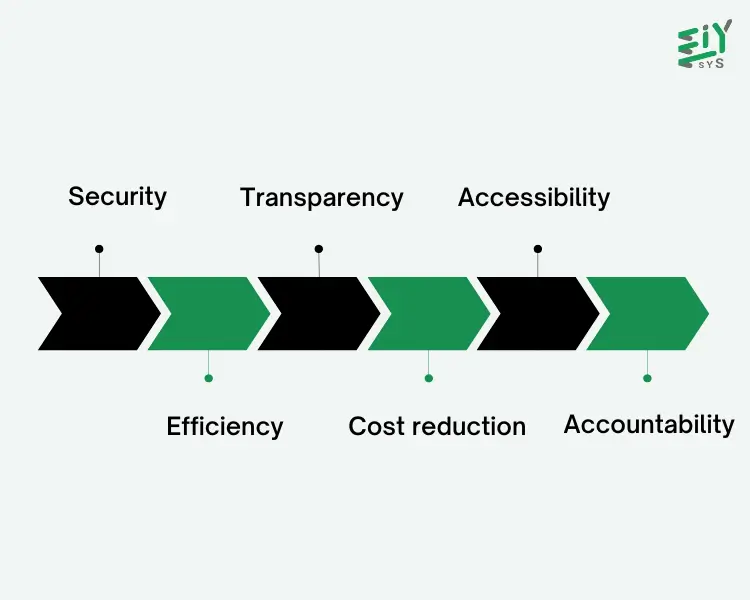
The future of blockchain DApps offers several advantages, such as:
- Security: Blockchain technology can enhance security by making data immutable and preventing unauthorized access.
- Efficiency: The future of blockchain DApps will improve efficiency by automating processes and eliminating the need for intermediaries.
- Transparency: Blockchain can increase transparency by creating secure, verifiable records of transactions and activities.
- Cost reduction: Blockchain can help reduce costs by minimizing the reliance on intermediaries.
- Accessibility: It can improve accessibility by reducing the need for middlemen.
- Accountability: Blockchain boosts accountability by making documents tamper-proof.
What Is The Difference Between Decentralised vs Centralised Apps?
The difference between Decentralised vs Centralised Apps are :
Centralized Applications
- Applications that are controlled by a single individual or business are known as centralized apps.
- In these applications, information always flows through a single server or cluster of servers.
- The dedicated server contains all the required logic to execute an application.and this enables it to execute the desired action as well.
- With the centralized approach, the user downloads the app from the app store and uses the app by sending the request/information to the centralized server or cluster of servers.
- Upon receiving the request, the server processes it and sends out the response accordingly.
- The centralized app is used by millions of people including the Big Five of the world termed as GAFAM, i.e. Google, Apple, Facebook, Amazon, and Microsoft .
Decentralised Applications
- DApps or decentralized apps are just the opposite of centralized apps.
- The decentralized apps run on the blockchain or Peer to Peer (P2P) networks of computers rather than central servers. Here are some powerful features of the DApps–Decentralized-Deterministic and predictable-Turing complete.-Isolated
- To access decentralized apps, users pay developers using cryptocurrency instead of downloading the app.
- They can also access the app’s source code through a “smart contract.”
- Unlike centralized apps, the backend of decentralized apps operates on a P2P network rather than centralized servers.
- Some of the popular DApps in the market are Uniswap, CryptoKitties, Rarible, IDEX, MakerDAO, CryptoPunks, BitTorrent, Audius, and MetaMask .
Step 1: Analyze the Industry for App Development : Blockchain for app development can significantly benefit various industries like banking, insurance, healthcare, real estate, retail, supply chain, and gaming. For example, it enhances transparency and efficiency in banking (such as with JP Morgan Chase), improves security in insurance (like Insurwave), facilitates data sharing in healthcare (e.g., HealthVerity), and reduces fraud in real estate (e.g., Propy).
Step 2: Come Up with an Idea : Define the purpose of your app and determine whether blockchain technology is necessary for your solution. Weigh the potential advantages against the costs involved in developing the app.
Step 3: Do Competitor Research : Study your competitors to understand their offerings and find areas where you can differentiate your app.
Step 4: Choose a Platform for Your Blockchain Project : Decide whether you want to build your own blockchain or leverage an existing platform like Ethereum, Hyperledger, R3 Corda, or Ripple, depending on your project’s requirements.
Step 5: Design Your Blockchain App : Create a detailed design of your app’s structure and features, ensuring that everything works seamlessly together.
Step 6: Start the Development and Testing Process : Begin developing and testing the app on the chosen platform, making sure to clarify all technical details before starting the coding process. Conduct thorough quality assurance testing to ensure everything functions as expected.
Step 7: Maintenance and Support : Update and enhance your app regularly to meet evolving business needs, with professional help for maintenance if required.
Step 8: Marketing and Promotion : Promote your app through strategies like content marketing, SEO, paid advertising, social media, and influencer partnerships. Focus on gathering user feedback to improve your approach and fine-tune your blockchain for app development strategy.
Conclusion
At EIY SYS, we believe the Future of Blockchain DApps will significantly impact various sectors by offering decentralized, secure, and transparent alternatives. The Benefits of Decentralized Applications—such as better security, privacy, and increased efficiency—are valuable for businesses seeking cost reduction and greater accountability. Understanding How DApps Work is key to leveraging blockchain’s full potential. As Popular Blockchain DApps in 2024 continue to grow, the transition from Decentralized vs Centralized Apps will reshape digital platforms.
Our Blockchain for App Development services help clients capitalize on these changes, unlocking new opportunities and driving efficiency.
Frequently Asked Questions
DApps offer enhanced security, transparency, and privacy by using blockchain technology. They are resistant to censorship, efficient due to automation, and operate without downtime. DApps are open-source, ensuring accessibility and decentralization.
DApps run on decentralized peer-to-peer networks with their backend code on blockchain platforms like Ethereum. The frontend can be developed in any language and hosted on platforms like IPFS. DApps are characterized by decentralization, consistency, and computational flexibility.
Popular DApps in 2024 include Uniswap V4, Aave 3.0, Compound, Decentraland, and Chainlink. Other notable platforms include Bitcoin, Celo, and Solana, with Ethereum 2.0, Binance Smart Chain, and Cardano being key blockchain ecosystems.
Blockchain DApps will enhance security, automate processes, and improve transparency across industries. They will help reduce costs, eliminate intermediaries, and provide greater accountability, transforming sectors like finance, healthcare, and supply chain.
Centralized apps are controlled by a single entity with data processed through a central server. In contrast, DApps run on blockchain or peer-to-peer networks, offering features like security, transparency, and resistance to censorship.
To develop a blockchain app, first analyze the industry, create a unique idea, and research competitors. Choose a suitable blockchain platform, design the app, develop and test it, and then maintain and promote it using strategies like SEO and social media.