As artificial intelligence innovation is integrated with blockchain technology, its landscape is undergoing incredible transformations. The virtual digital assets business continues to flourish, and AI in blockchain is playing an increasingly important role in improving processes such as efficiency, security, and decision-making.
It is predicted that artificial intelligence will completely transform the way in which virtual digital assets cryptocurrency are traded, managed, and protected in the future. As a result of artificial intelligence (AI), digital asset cryptocurrency platforms began predicting market trends accurately, detecting fraud, and optimizing trading strategies with unprecedented accuracy.
With AI in blockchain convergence, it opens up new possibilities for digital assets businesses. The companies that use these technologies are ripe for a sea change in digital transactions that will change everything.
What is The Role of AI in Blockchain?
The use of artificial intelligence in blockchain is improving the efficiency of several operations involving functionality. Automation of routine time-consuming activities, such as checking transactions and automating smart contracts, is the main application of this area of application.
In addition to AI’s use in blockchains, it is also important to consider the security aspects. Continuously monitoring blockchain networks for suspicious activity and detecting threats in real-time, AI in blockchain systems continuously monitor the blockchain networks for suspicious activity. AI in blockchain analyzes various parameters and behavioral patterns to detect any anomalies that may indicate fraud or cyber-attacks.
The application of artificial intelligence in the blockchain ecosystem can also improve the decision-making process. By using machine learning algorithms, AI can give insights into market trends that enable investors and businesses to forecast and make informed decisions.
What Are The Blockchain Digital Assets?

There are a variety of virtual digital asset cryptocurrency on the blockchain that can be stored, transferred, or traded digitally due to the inherent decentralization of the blockchain.
Blockchain assets include:
1. Cryptocurrencies
- Bitcoin: As a decentralized cryptocurrency, Bitcoin is the most popular cryptocurrency.
- Ethereum: This cryptocurrency is well known for its smart contracts and decentralized applications, but it is also a cryptocurrency and platform.
2. Tokens
- Utility Tokens: These involve giving users access to certain services and functionalities within a blockchain ecosystem. The Basic Attention Token (BAT) is an example.
- Security Tokens: Stocks, real estate, or bonds represent ownership stakes in real-world assets. A good example is tZero (TZROP).
- Non-Fungible Tokens (NFTs): A digital asset business is something that represents ownership of a particular item, such as digital art collectibles or virtual real estate. An example would be CryptoKitties or NBA Top Shot.
3. Smart Contracts
- Self-Executing Contracts: An automated agreement whose terms are directly written in software, which allows, verifies, and enforces the performance of a contract without involving any third parties.
4. Other Digital Assets Cryptocurrency
- Stablecoins: In order to maintain a stable value, these coins are pegged to the value of some reserve asset, such as the US dollar. Tether (USDT) is an example.
- Digital Collectibles: The term refers to distinct digital items within a digital environment that can be used, collected, or exchanged. These are unique digital items that have been certified and are usually secured through the use of blockchain technology.
- Digital Identity Assets: In order to verify Anne’s identity using private and secure methods on chain, cryptographically secure representations of her personal information are needed.
How Does the Integration of AI and Blockchain Impact Digital Assets Businesses?
Integrating these systems significantly improves the efficiency and security of digital assets business management. Ai automates key processes like transaction verification, smart contract execution, and data analysis, reducing human error and accelerating operations.
- Process Automation : Reviewing transactions, executing smart contracts, and analyzing the data collected as a result of the smart contracts.
- Real-Time Threat Detection: Continuous monitoring allows for the detection of fraud and cyberattacks when the criteria for detecting them do not meet.
- Predictive Maintenance: When an infrastructure is maintained in advance of a possible disruption, it prevents problems from occurring.
Digital assets cryptocurrency management can also be improved by artificial intelligence in terms of decision-making and market insight. Using artificial intelligence, large volumes of market data are analyzed to detect patterns and trends that can guide investors and traders alike.AI-driven models evaluate the risks associated with different digital assets businesses, so stakeholders can make informed decisions to contain any potential losses through this feature.
- Market Trend Analysis: Analyze Trends and Patterns to Make Imperative Investment Decisions.
- Risk Management: A process of reducing the probability of loss by calculating the risks involved in the situation.
- Personalized Investment Strategies: It is possible to create organized portfolio performance by creating incentives that are intended to encourage advice.
How Does AI-Driven Analytics Benefit Blockchain-Based Finances?
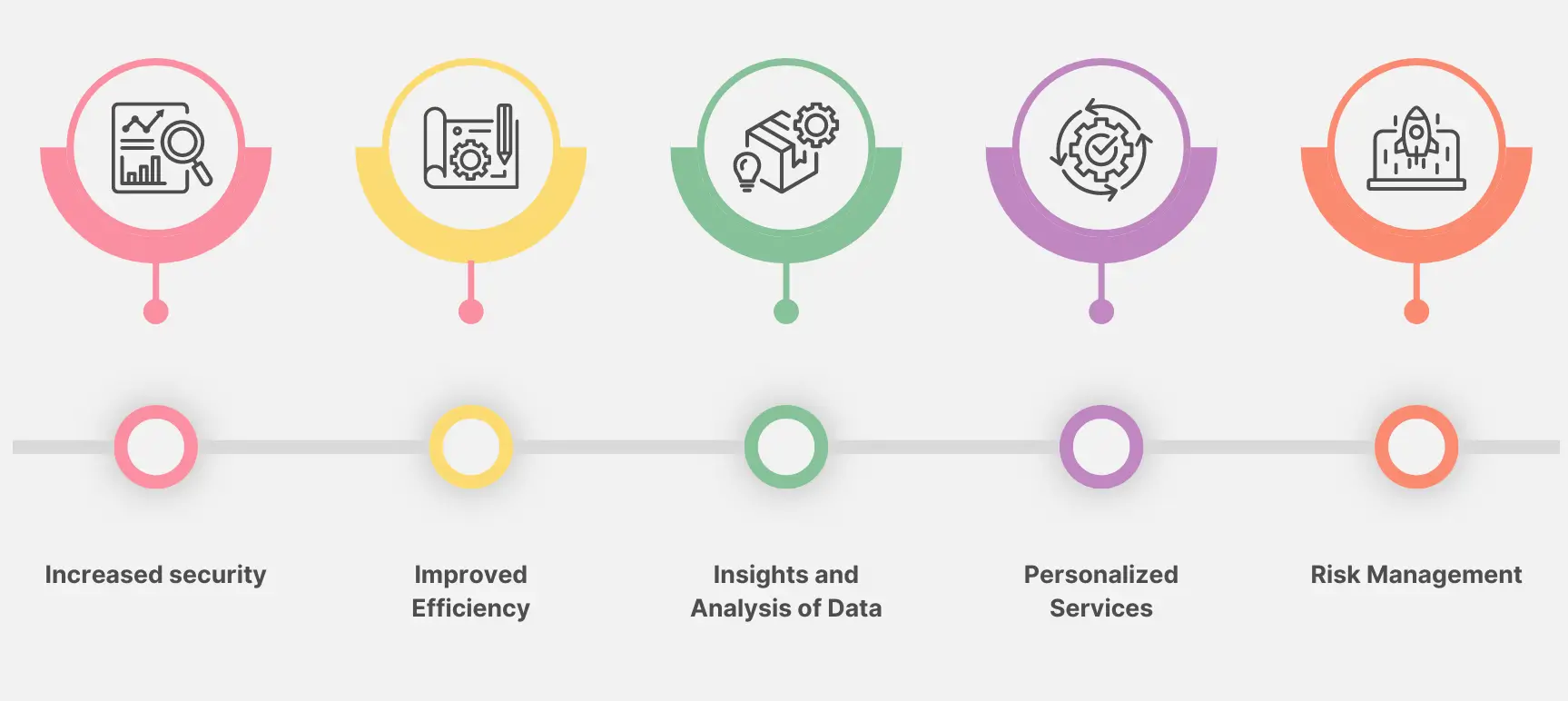
Using AI-driven analytics to analyze blockchain-based financial data has several advantages. As a result of such services, you can enjoy the following benefits:
1. Increased Security
- Fraud Detection: Using algorithmic techniques, blockchain transactions can be identified for unusual patterns of anomalies, including fraud.
- Real-time Monitoring: Continuously monitoring transactions allows security threats to be detected and reduced in real-time.
2. Improved Efficiency
- Automation: Artificial intelligence can automate complex processes involving manual intervention, increasing the speed of operations; this includes verification and compliance with contractual requirements.
- Smart Contracts: As AI becomes more accommodating to a variety of scenarios and conditions, smart contracts will become more useful.
3. Insights and Analysis of Data
- Predictive Analytics: Models based on artificial intelligence can be used to predict market trends and asset prices, so that investment decisions can be guided.
- Sentiment Analysis: Artificial intelligence can analyze social media and news sources for market sentiment as an indicator of movement.
4. Personalized Services
- Customer Profiling: Using artificial intelligence to analyze user behavior and transaction history, real customer profiles can be created; this enables financial products and services to be more tailored to the needs of the individual.
- Chatbots and Virtual Assistants: Artificial intelligence-powered chatbots offer real-time support to clients, offering them personalized financial advice.
5. Risk Management
- Credit Scoring: By processing large amounts of data, AI can more accurately determine a person’s or organization’s creditworthiness.
- Portfolio Management: Using AI algorithms, investment portfolio optimization can look at factors like risk and market conditions to determine the best investment portfolio.
Conclusion
By combining AI and blockchain, digital assets business alone are redefining themselves. By introducing top-to-bottom efficiency and security to the digital assets business, AI in blockchain changed the way digital assets are maintained, traded, and secured.
Eiy sys mission is to utilize this synergy to provide safe, effective, and creative solutions that drive the digital asset market forward. The integration of blockchain technology with artificial intelligence (AI) promises to revolutionize the way we interact with this and influence the direction of the digital economy in the future.
In a future where personalized investment strategies and improved security protocols reimagine the potential of virtual digital assets businesses, digital assets cryptocurrency platforms continue to innovate with AI. This is heading for a bright future thanks to artificial intelligence and blockchain.
Frequently Asked Questions
The use of artificial intelligence enhances security by detecting anomalies in real time, identifying unusual transaction patterns and automating smart contract monitoring for vulnerabilities.
By enabling algorithmic trading strategies, AI makes trading more efficient by analyzing market data, executing trades at optimal times, and adapting to changing market conditions. Additionally, it is used for sentiment analysis by analyzing news and social media to predict market movements.
Yes, AI can enhance efficiency by optimizing transaction processing, automating repetitive tasks, and improving transaction data management. It can speed up and improve the accuracy of transactions.
The use of artificial intelligence contributes to the creation of unique digital content for NFTs, the evaluation of market trends to determine their value, and the verification of ownership and authenticity of NFTs through automated processes.