Due to the rising popularity and value of digital currencies like Bitcoin and Ethereum, Crypto mining regulations has emerged as one of the fastest-growing sectors in the world. On the other hand, there are now a lot more mining operations, which raises serious questions regarding Energy consumption in mining, financial stability and environmental impact. Global governments are currently taking steps to control cryptocurrency mining in an effort to strike a balance between sustainability and innovation. Regulations pertaining to cryptocurrency mining are changing as nations like China, the US and Canada put in place certain rules to control the sector’s explosive growth.
We’ll examine the present status of cryptocurrency mining laws in this blog, with an emphasis on Canada’s strategy, the effect of mining electricity rates, the function of blockchain regulation and the wider effects on energy usage.
What is Crypto Mining?
Prior to delving into the legal environment, it’s critical to comprehend the nature of bitcoin mining. To put it simply, mining cryptocurrency is the process of protecting and verifying transactions on a network of blockchains. Strong computer systems are used by miners to solve challenging mathematical puzzles that guarantee the authenticity of cryptocurrency transactions. Miners receive fresh bitcoin coins as payment for their labors.
The mining process uses a lot of energy because it demands a lot of processing power, especially for cryptocurrencies like Bitcoin. The mining process becomes progressively more energy-intensive as more miners join the network and the level of competition rises. Regulators from all over the world have become interested in this energy requirement, which has led to the emergence of laws for cryptocurrency mining that attempt to handle financial risks as well as environmental issues.
Why There is Need for Crypto Mining Regulations?
Governments are starting to realize that there are a number of problems associated with the unchecked rise of cryptocurrency mining. Among them are:
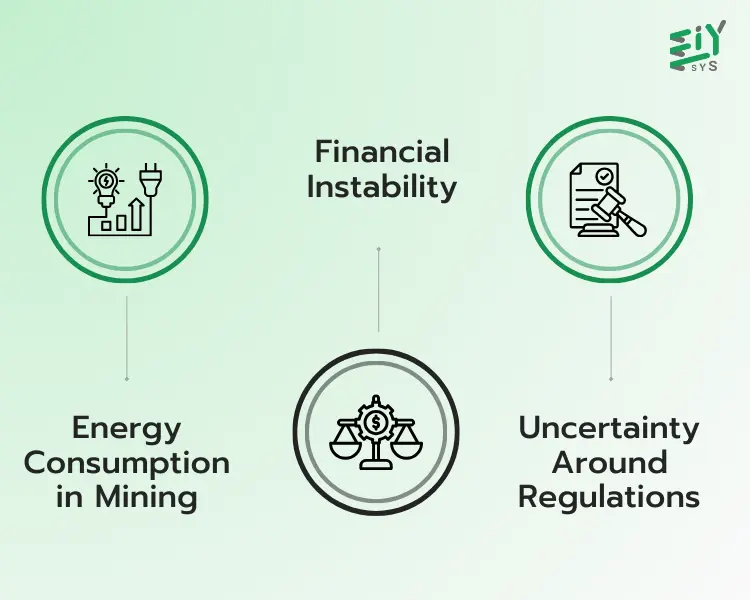
- Energy Consumption in Mining: The need for electricity in mining operations increases as they expand. This can put a burden on electrical systems and raise carbon emissions, particularly in areas that depend on non-renewable energy sources.
- Financial Instability: Due to the fluctuation of cryptocurrency values, mining operations may suddenly lose money, which puts investors and miners in a precarious financial situation.
- Uncertainty Around Regulations: In the absence of clear laws, fraud, money laundering and other illegal activities may flourish in the bitcoin sector.
Countries like Canada are enacting particular crypto mining laws that control electricity usage, environmental effect and financial compliance in order to allay these worries.
What are Canadian Crypto Mining Regulations?
Canada’s excellent environment and easy access to affordable, renewable energy sources have made it a major player in the worldwide cryptocurrency mining market. Many miners have been drawn to the nation by its abundant natural resources and inexpensive mining electricity rates, especially in provinces like Alberta, British Columbia and Quebec. Nonetheless, a variety of regionally-specific federal and provincial laws apply to cryptocurrency mining in Canada.
Federal Regulations
Canada’s approach to bitcoin and blockchain regulation at the federal level is currently developing. Although there are currently rules from the Canada Revenue Agency (CRA) and the Financial Transactions and Reports Analysis Centre of Canada (FINTRAC) that relate to mining activities, the federal government has not enacted any laws that expressly target crypto mining.
- Taxation: Profits from mining cryptocurrencies are categorized as taxable income by the CRA. Whether the miner is operating as a company or a hobby determines the precise tax treatment. Large-scale mining operations are normally subject to business tax rates and are handled like enterprises. Penalties may arise from failing to report mining profits.
- Anti-Money Laundering (AML) and Know Your Customer (KYC): Mining companies that convert cryptocurrency into fiat money could be considered money services businesses (MSBs). These companies must adhere to Canada’s AML and KYC laws and register with FINTRAC.
Provisional Regulations
Provincial rules pertaining to cryptocurrency mining are centered around energy management and environmental impact, with the federal government supervising financial compliance. Considering that mining is heavily reliant on electricity and that the provinces manage the energy supplies, this makes sense.
- Quebec: Because its hydroelectric power is so inexpensive, Quebec is a mining hotspot for cryptocurrencies. But when mining grew and the need for energy grew as well, the province passed new legislation that doubled the cost of Mining electricity rates. Hydro-Québec, the energy regulator for Quebec, set a maximum quantity of electricity that may be allotted to mining installations and created a specific rate for cryptocurrency miners. By combining financial gains with sustainability, these steps were intended to prevent the mining industry from overusing the province’s energy resources.
- British Columbia: Like Quebec, this province has drawn a lot of cryptocurrency mining companies and depends largely on green energy. However, due to worries about energy consumption and the effects on the environment, the province temporarily halted new mining operations in 2022. Since then, British Columbia has been looking into methods to better regulate the sector, maybe by establishing new rules for sustainability and energy use.
- Alberta: on the other hand, has made a point of presenting itself as a mining-friendly jurisdiction with laxer electricity usage regulations. Because the province’s electricity market is deregulated, miners have greater flexibility in finding reasonably priced energy because they can bargain with power providers for lower rates. Because of its abundant natural gas resources, miners looking to lessen their dependency on the grid are drawn to Alberta.
These regional variations show how different Canadian crypto mining provinces have approached regulating bitcoin mining. While some areas are enforcing more stringent regulations on energy usage, others are cultivating a more laid-back atmosphere in an effort to draw in mining companies.
What are the Focus of Energy Consumption in Crypto Mining?
One of the most important topics in the discussion of rules pertaining to cryptocurrency mining is the high Energy consumption in mining. The environmental impact of cryptocurrency mining is well-known; according to some estimates, the mining of Bitcoin alone uses more electricity annually than nations like Argentina or the Netherlands.
Regulators are keeping a closer eye on mining due to growing concerns about its effects on the environment. Canadian crypto mining regions like British Columbia and Quebec, which have abundant renewable energy resources, are in a good position to encourage more environmentally friendly mining practices. Regulators are wary of permitting mining to use an excessive amount of the available energy supply, even in these areas.
Sustainability and Renewable Energy
Using renewable energy sources is one way to potentially solve the energy crisis. Canada is a prime destination for sustainable mining due to its abundant hydroelectric power supplies. While some mining corporations are experimenting with alternate energy sources like solar and wind power, others have already committed to using entirely renewable energy.
The utilization of extra natural gas from oil drilling that would otherwise be flared or wasted is another possibility being investigated by certain mining operations. In order to minimize environmental damage and lessen dependency on grid electricity, this gas can be transformed into electricity to power mining activities. Blockchain regulations will probably incorporate more stringent Energy consumption in mining restrictions as the industry develops, which will encourage more mining businesses to adopt sustainable methods.
How is Blockchain Technology Implicated in Crypto Mining Regulations?
In addition to energy-related issues, the regulatory landscape surrounding blockchain technology is also changing. Beyond digital assets and mining, blockchain technology, which powers cryptocurrencies, has other uses. It can be applied to a number of sectors, including supply chain management, healthcare and finance. Blockchain technology development has been led by Canada and the country’s regulatory bodies are attempting to make sure the technology stays inside the law.
In an effort to safeguard investors and preserve market stability, the Canadian crypto mining Securities Administrators (CSA) have released guidelines regarding the regulation of cryptocurrency assets and exchanges.
The bitcoin mining sector will probably be significantly impacted by the development of blockchain regulation. Mining firms will function differently as a result of stricter regulations pertaining to consumer protection, transparency and blockchain network security, especially in areas with robust financial monitoring.
Conclusion
Regulations pertaining to Crypto mining regulations will probably be influenced by a mix of energy management, financial supervision and environmental concerns. Regulators will need to weigh the industry’s possible drawbacks against its economic advantages as bitcoin mining grows. In Canada, Mining electricity rates and energy use are already major concerns at the province level, with British Columbia and Quebec setting the standard for environmentally friendly solutions. Federal authorities are concentrating on making sure that tax laws, rules against money laundering and more general blockchain regulatory frameworks are all followed in the interim.
Though it faces a number of challenges, it is a shining star in the Flutter sky. It is up to you to choose the right star from among them. We Eiy sys will leverage this technology to advance a step ahead of others. Do you feel ready? Then buckle up and begin your journey with Eiy sys.
Frequently Asked Questions
The laws and rules that control cryptocurrency mining activities are referred to as crypto mining regulations. They deal with matters such as financial compliance, taxes, energy use and environmental effect.
Federal and provincial rules do exist in Canada. Federal regulations mostly address financial compliance and taxes, but provinces such as British Columbia and Quebec regulate energy consumption and its effects on the environment.
Sustainable energy practices are crucial since cryptocurrency mining is an energy-intensive industry that, in the absence of restrictions, might strain regional power systems and raise carbon emissions.
Yes, mining revenues from cryptocurrencies are taxable in the majority of nations, including Canada. The tax treatment varies according to whether mining is viewed as a hobby or a business.