


Blockchain for DAOs forms the backbone of Decentralized Autonomous Organizations, enabling transparent, secure, and decentralized operations. Using smart contracts on the blockchain, DAOs allow for automated decision-making and execution of actions without a central authority. These self-executing contracts ensure tasks like releasing funds or voting outcomes are carried out when conditions are met, enhancing efficiency.
With tokens representing voting power, DAO participants can propose and vote on changes, with influence proportional to the tokens held. The transparency provided by blockchain ensures that all actions and decisions are publicly visible, promoting accountability. Blockchain technology ensures security through cryptographic encryption, safeguarding against unauthorized changes or attacks. Its decentralized nature makes DAOs more resilient, and global participation fosters democratic governance. Through Blockchain for DAOs, organizations operate autonomously, minimizing the need for traditional management while giving every member an equal voice.
What Are Decentralized Autonomous Organizations (DAOs)?
DAOs are systems where all members have an equal role in decision-making, with no central authority.While DAOs are typically built on blockchain technology, ensuring a high level of security, any online activity comes with inherent risks.
What Are Blockchain Platforms?
Blockchain platforms are decentralized digital systems that record transactions and share information securely.Unlike traditional databases, these platforms rely on a network of computers to manage and update the ledger.Transactions are validated through consensus, ensuring that all records are accurate and trustworthy without the need for a central authority.
Blockchain platforms have a broad range of uses, from supporting cryptocurrencies to managing supply chains, executing smart contracts, and more.These platforms offer transparency, security, and decentralization, reshaping industries and offering innovative solutions to business challenges.
What Is The Process For Creating A DAO?
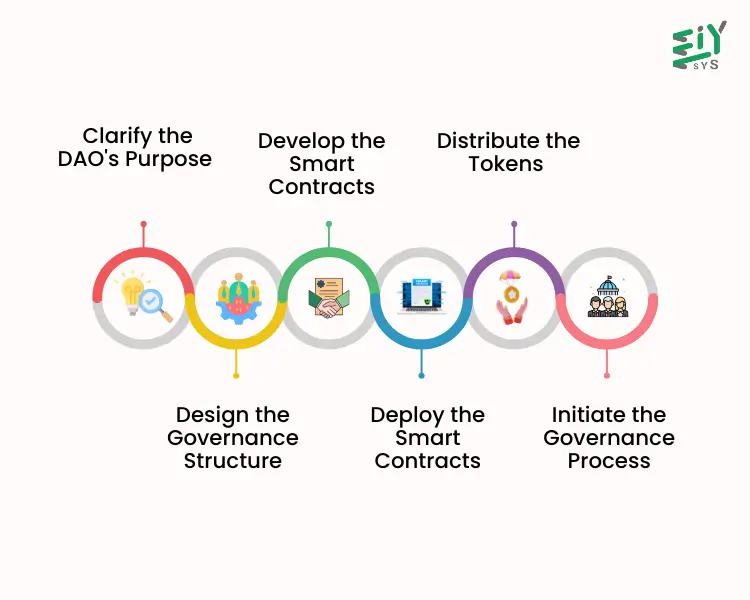
Building a DAO involves creating smart contracts, deploying them on the blockchain, and designing a governance system.
- Clarify the DAO’s Purpose: Define the objective of your DAO, which will direct the design of the governance structure and smart contracts.
- Design the Governance Structure: The governance model specifies how decisions will be made.Consider voting rights, proposals, voting process, and token distribution.
- Develop the Smart Contracts : Smart contracts, typically written in Solidity for Ethereum, implement the governance structure.These require thorough testing and auditing to ensure security.
- Deploy the Smart Contracts : After successful testing, deploy the smart contracts, launching the DAO and generating associated tokens.
- Distribute the Tokens : Distribute tokens as per the planned method public sale, airdrop, or to founding members.
- Initiate the Governance Process : Once the DAO is operational, members can start submitting and voting on proposals.
What Makes Ethereum For DAOs A Popular Choice?
Ethereum is widely chosen for building DAOs due to features like:
– Open-Source: Ethereum allows developers to innovate freely.
– Mature Ecosystem : With a robust ecosystem, developer tools, and an active community.
– Smart Contracts : Ethereum supports smart contracts, enabling the core functionality of DAOs.
– Security : Ethereum’s decentralized structure offers high security.
– Interoperability : Easily integrates with other decentralized technologies.
– Scalability : Ethereum 2.0 and Layer 2 solutions improve scalability.
– Voting Systems : Ethereum-based voting ensures transparency and security.
What Challenges Might Arise When Using Blockchain For DAOs
Challenges include:
– Security: Blockchain for DAOs can be vulnerable to hacking, potentially compromising the system’s integrity.
– Governance: If the blockchain is compromised, rules in smart contracts could be altered.
– Scalability : Blockchain networks may become slow and inefficient as usage grows.
– Regulation: DAOs may face challenges with compliance across multiple regions.
– Flexibility: ixed rules in smart contracts may limit adaptability.
– Decentralized Governance Issues : Some decisions may require specialized knowledge that all members might not have.
What Are The Key Principles Of Blockchain Governance?
Key principles of blockchain governance include:
– Decentralization: The degree of decentralization in governance.
– Transparent Decision-Making: Ensuring clear decision-making processes.
– Accountability: Holding participants responsible for their actions.
– Incentives: Aligning the interests of all participants.
– Legal Compliance: Addressing legal and ethical responsibilities.
– Ecosystem Governance: Governing not just the platform but also its broader ecosystem.
What Is DAO Technology And How Does It Work?
DAO technology operates without a central governing body, enabling decentralized decision-making.Smart contracts automate decisions once the required votes are reached.If a proposal fails, the contract ensures no action is taken.For example, in a cryptocurrency DAO, members may propose changes to tokenomics, such as increasing coin supply or issuing rewards to token holders.
Conclusion
EIY Sys provides valuable insights into the transformative potential of Blockchain for DAOs. By utilizing blockchain platforms such as Ethereum, Decentralized Autonomous Organizations (DAOs) establish a decentralized, transparent, and secure environment for decision-making and task execution. With features like smart contracts, voting systems, and token allocation, DAOs creation allows members to actively shape the organization’s operations, promoting a participatory and accountable structure. While there are challenges related to security, governance, scalability, and regulatory concerns, the ability of Ethereum for DAOs to revolutionize organizational models and foster collaboration is undeniable.
As blockchain governance continues to advance, it will increasingly influence how these systems are managed. Through DAO technology, automation ensures that decisions are efficiently carried out once the necessary votes are obtained. Looking ahead, DAOs have the potential to become a significant force in the decentralized world, offering innovative solutions across various sectors.
Frequently Asked Questions
Blockchain for DAOs refers to using blockchain technology to support Decentralized Autonomous Organizations (DAOs). This setup enables a transparent, secure, and decentralized way of making decisions without the need for a central authority, powered by smart contracts.
DAOs operate by utilizing blockchain and smart contracts, which automatically execute decisions once certain conditions are met. Members use tokens to vote on proposals, and all actions are recorded on the blockchain, ensuring openness and accountability.
r DAOs? Ethereum is a popular choice for DAOs because it supports smart contracts, making decentralized decision-making possible. It’s secure, scalable, and offers an established ecosystem that allows developers to build robust DAOs with ease.
Creating a DAO involves defining its purpose, designing a governance structure, coding and deploying smart contracts on the blockchain, distributing tokens, and starting the voting and decision-making processes. This structure ensures the DAO operates independently and securely.
Blockchain gives DAOs transparency, security, and decentralization. It automates decision-making through smart contracts, reduces the need for intermediaries, and ensures all decisions are recorded in an unchangeable and publicly accessible way, building trust and accountability.
Some of the challenges include security risks like hacking, scalability issues as the DAO grows, conflicts among members about decisions, regulatory hurdles due to varying laws across regions, and the rigid nature of smart contract rules that might not be flexible enough for changing situations.
