A distinguishing characteristic of Blockchain is its decentralized Apps (dApps) nature, which is shared by all network participants, eliminating the need for middlemen or third-party intermediaries. This feature saves you time and eliminates the possibility of a process conflict, which makes it quite helpful. Blockchain provides alternatives that are quicker, less expensive and more effective than traditional systems—even though there are still a lot of problems to be worked out. As a result, these days even banks and governmental institutions are using blockchain technology. One could argue that the most popular use of blockchain technology nowadays is smart contracts.
A smart contract is a set of computer code that operates on top of a blockchain and is executed by two or more parties. It contains a set of rules that have been decided upon by all parties. When the smart contract is executed, it produces the result if the predefined rules are fulfilled. By facilitating, validating and enforcing the terms of an underlying decentralized Apps (dApps), this piece of programming enables decentralized Apps (dApps) contract automation. Without the need for an intermediary and maintaining a conflict-free system, smart contracts allow you to exchange anything of value, such as cash, stocks, real estate, etc., in an open and transparent manner.
How do smart contracts operate?
Smart contracts function by executing straightforward “if/when…then…” instructions encoded into code on a blockchain. When predefined circumstances are satisfied and validated, a computer network puts the actions into effect. These activities could be assigning a ticket, registering a car, notifying the right people, or releasing money to the right people. Upon completion of the secure transactions, the blockchain is updated. This implies that the results are only visible to those who have been given permission and that the secure transactions cannot be altered.
A smart contract may have as many clauses as necessary to guarantee the participants’ satisfaction with the task’s completion. Participants must agree on the “if/when…then…” rules that govern those secure transactions, investigate any potential exceptions, design a framework for resolving disputes and decide how secure transactions and their data are represented on the blockchain in order to set the conditions.
A developer can then create the smart contract; however, more and more companies using blockchain technology for business are offering templates, web interfaces and other online tools to make the process of creating smart contracts easier.
What are the Types of Smart Contract?
1. Astute Legal Agreement
Smart contracts have legal guarantees. They have the same structure as contracts: “If this happens, then this will happen.” Since legal smart contracts are maintained on blockchain and cannot be changed, they offer greater transparency between contracting parties than traditional paperwork. Digital signatures are used by the parties to complete contracts. Smart legal contracts have the ability to function independently provided specific criteria are fulfilled, such as making a payment when a predefined deadline is reached. Stakeholders risk severe legal consequences if they don’t comply.
2. Decentralized Autonomous organizations (DAOs)
Smart contracts endow democratic organizations known as DAOs with the ability to cast ballots. Under collective control, a decentralized Apps (dApps) autonomous organization, or DAO, is a blockchain-based entity with a common objective. A president or an executive are nonexistent concepts. Rather, the contract’s code incorporates blockchain-based concepts that regulate the organization’s operations and asset distribution. VitaDAO is one instance of this type of smart contract; it leverages technology to power a scientific research community.
3. Contracts for Application Logic
Application logic contracts, or ALCs, are composed of application-based code that typically synchronizes with many other blockchain contracts. It allows for device-to-device communication, which is useful for Internet of Things and blockchain integration. Unlike other types of smart contracts, these are signed between computers and other contracts rather than between individuals or entities.
Why Do We Now Need Smart Contracts?
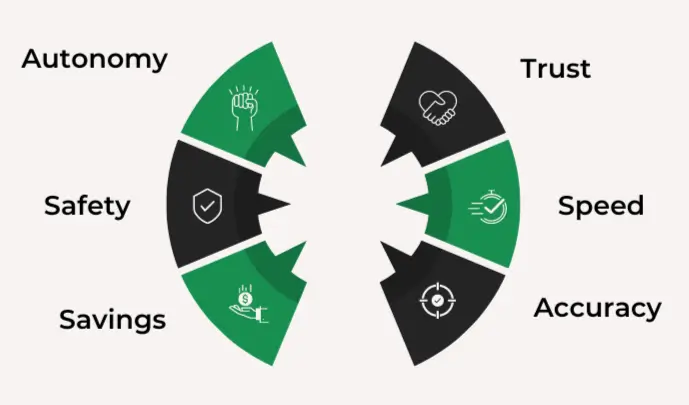
Because smart contracts have many advantages over manual contracts, we may implement them in our daily lives and get amazing results. Let’s examine the advantages that smart contracts provide:
-
Autonomy
You draft the agreement on your own; no broker, attorney, or other middlemen are required for approval. Because execution is controlled by contract automation by the network rather than by one or more biased individuals who might make a mistake, this also removes the possibility of manipulation by a third party.
-
Trust
On a shared ledger, your documents are encrypted. It is impossible for someone to claim they lost it.
Backup: Assume that your savings account was misplaced by your bank. Every single friend of yours has your back on the blockchain. Your documents are repeatedly copied.
-
Safety
Document security is ensured via websites encrypted using cryptography. It is impervious to hackers. To actually crack the code and get access, a hacker of extraordinary intelligence would be required.
-
Speed
Processing papers by hand typically requires a large investment of time and paperwork. Smart contracts reduce the number of hours involved in various company processes by contract automation operations through software code.
-
Savings
Because smart contracts do not require an intermediary, they save you money. For example, you would pay a notary to witness your secure transactions.
-
Accuracy
Contract automation is not only more cost-effective and faster than manual contract filing, but they also prevent errors from occurring.
What are the Challenges with Smart Contracts?
- Absence of rules: Blockchain technology and associated technologies, such as smart contracts, mining and cryptocurrency use cases, are difficult to regulate because there are no international regulations addressing them.
- Hard to Implement: The fact that smart contracts are still a relatively new idea and that research is still being done to completely understand them and their ramifications makes them difficult to execute.
- Essentially unchangeable: They exhibit no variation. A new contract must be created and put into the blockchain if there is a modification that has to be made to the original.
- Alignment: Whether or not a smart contract is in line with the intentions and understanding of all parties involved, it nonetheless expedites the execution of multi-party processes.
Conclusion
In summary, smart contracts often operate on a system that combines digital assets with numerous parties so that each party can contract automation and manage its assets. The contract’s regulations will govern the deposit and distribution of these assets among the parties. Smart contracts are affordable and have the ability to track performance in real time.
One of the top software development firms with a focus on blockchain Technology is Eiy sys. Our company is already assisting numerous other clients with the requirements of their projects and has already supplied an abundance of blockchain solutions. Being among the first to use this innovative technology, Eiy sys development team is an ideal collaborating partner for your upcoming project.
Frequently Asked Questions
Self-executing contracts, or smart contracts, have their terms encoded directly into the code. Without the need for middlemen, they automate and enforce agreements.
Smart contracts expedite transaction speeds and enhance overall workflow by automating procedures and removing manual labor and delays.
By lowering transaction fees and administrative expenses, they lessen the need for middlemen and eventually help firms save money.
The identical contract terms are available to all parties on a public ledger, guaranteeing clarity and minimizing disagreements over how to interpret the terms of the agreement.