Blockchain in crowdfunding has become one of the most efficient and revolutionary technologies of our time. There are many potential applications for Blockchain beyond Bitcoin and similar forms of money, which may result in a new era of crowdfunding; the era of disruption. Due to its ability to keep track of exchanges in a way that’s secure funding, publicly verified and virtually impossible to misuse, blockchain is gaining popularity and trust. You can create, distribute and exchange currency on this platform. Other assets may soon be able to be owned using Blockchain technology. The world of Crowdfunding could be completely transformed by the advantages of Blockchain.
An IPO on the stock exchange is a traditional strategy for financing the establishment and expansion of a business. Blockchain in crowdfunding is a method for smaller companies to finance their establishments and expansions. Many projects are able to obtain more secure funding, faster and at lower costs by using this approach. The popularity of crowdfunding has skyrocketed over the past decade or so, allowing non-traditional projects, such as those started by families in need or hopeful creatives, to reach a wider audience. Crowdfunding has proven extremely useful as an alternative to venture capital.
What is Blockchain in Crowdfunding?
With blockchain technology, crowdfunding involves raising money via a decentralized crowdfunding network using cryptocurrency or digital tokens. Blockchain technology uses distributed ledgers to track transactions across several network nodes and confirm them. Through this, crowdfunding can be conducted in a safe and open environment.
During a blockchain-based crowdfunding campaign, the entrepreneur develops a smart contract that specifies the parameters of the fundraising agreement. The smart contract is then published on the blockchain so that interested investors can access it. In turn, the blockchain records donations made by investors who can then use cryptocurrency or digital tokens to fund the campaign.
Whenever the financing target is met, the smart contract automatically disburses the money to the business owner. As a result, middlemen are not required and the process of raising money is more effective and transparent.
How does Blockchain Help in Crowdfunding?
Crowdfunding is a popular method used by entrepreneurs to generate capital for their business endeavors. Conventional crowdfunding does, however, present several disadvantages, such as high fees, regional limitations and lack of transparency in fundraising. A safer and more effective crowdfunding method would be provided by blockchain technology in this circumstance.
The blockchain technology powers a decentralized crowdfunding ledger that keeps a permanent and unchangeable record of all transactions. There are a number of features that make it the perfect platform for crowdfunding. Crowdfunding can benefit from blockchain in the following ways:
1. Integrity
Blockchain technology for decentralized crowdfunding offers transparency in fundraising, which is one of its main benefits. Each transaction on the blockchain is recorded and confirmed by multiple network nodes. It ensures that there will be no fraudulent behavior by creating a comprehensive and irrevocable record of all transactions.
2. Fee Reductions
There are significant service costs associated with traditional crowdfunding sites, which may reduce the amount of money businesses can raise. peer-to-peer investments networks enable blockchain-based crowdfunding platforms to eliminate the need for middlemen by using peer-to-peer investments networks. As a consequence, businesses are able to keep more money because the costs are lower.
3. International Reach
Due to geographical limitations, traditional crowdfunding platforms can sometimes limit entrepreneurs’ ability to reach a worldwide audience. Business owners, however, can access a worldwide audience through blockchain-based crowdfunding platforms, which are run on a decentralized crowdfunding network.
4. Smart Contracts
Smart contracts, or self-executing contracts, are another feature of blockchain technology that may be used. They automatically carry out the terms of an agreement when certain criteria are met. It may be possible to automate the crowdfunding process by using smart contracts, ensuring that only money is paid to the business owner after reaching predetermined milestones.
5. Tokenization
Business or project ownership can be represented by digital tokens created using blockchain technology. Initial Coin Offerings (ICOs) can be used to raise funds through these tokens. By utilizing ICOs, business owners can generate money rapidly and effectively without having to rely on conventional middlemen.
What are the Pro & Cons of blockchain in Crowdfunding?
Advantages
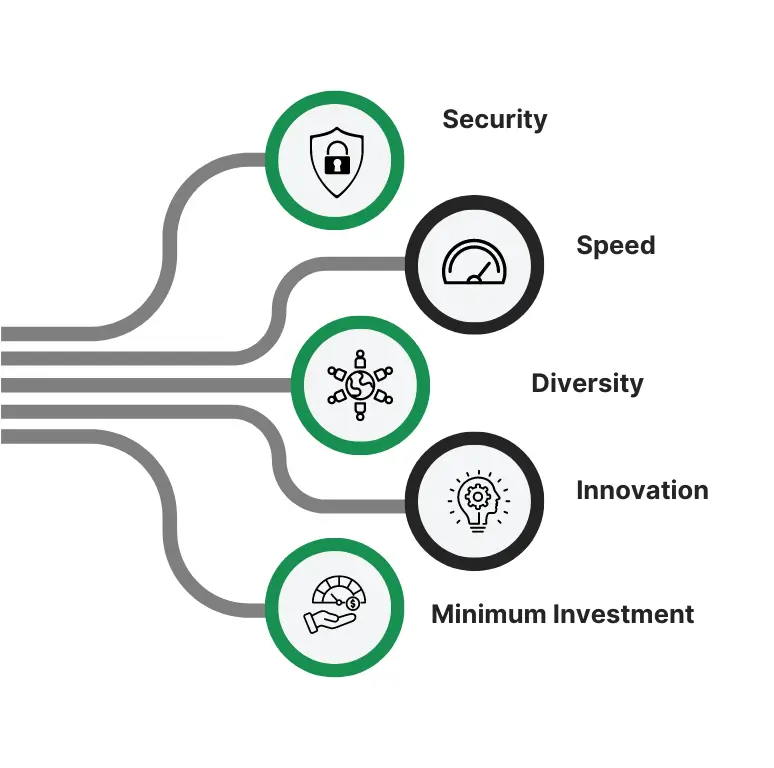
- Security: The blockchain technology provides high levels of security, protecting against fraud and hacking and making funds transfer safe.
- Speed:Crowdfunding campaigns based on blockchain can be launched quickly, enabling entrepreneurs to raise funds more efficiently.
- Diversity: The crowdfunding model of blockchain technology offers small investors the opportunity to invest in projects they believe in, promoting an ecosystem that is both diverse and inclusive.
- Innovation: There is no doubt that blockchain technology will continue to evolve in the future, leading to the emergence of new and innovative crowdfunding platforms.
- Minimum Investment: The low investment requirements of blockchain-based crowdfunding platforms make it possible for small investors to take part in investment opportunities that were previously out of reach.
Disadvantages
- Regulatory Lapses: Investing in blockchain technology through crowdfunding is relatively new and lacks regulatory oversight, which exposes investors to greater risk.
- Volatility:A high level of volatility is often associated with cryptocurrencies and digital tokens, which expose investors to a higher level of risk than traditional peer-to-peer investments.
- Transparency Lacking: Blockchain technology facilitates transparency in fundraising, but some crowdfunding campaigns lack information about the underlying venture, exposing investors to the risk of investing in a poorly conceived or fraudulent one.
- Liquidity Constraints: It is true that tokenizing provides investors with a more liquid asset, but it is also true that some digital tokens are difficult to sell or trade, leaving investors with a lack of liquidity.
- Overcrowding: Blockchain-based crowdfunding may crowd out traditional investment channels, limiting access to capital for entrepreneurs who do not understand or cannot access blockchain-based crowdfunding platforms.
Conclusion
Consequently, Blockchain in crowdfunding has gradually gained scholarly attention as a method of financing. Other related research has also gradually focused on the introduction of BT into the crowdfunding supply chain to co-create value. In contrast, there is a lack of research on the choice of different crowdfunding methods and the application of crowdfunding to leading marine ranching enterprises. As a result, this paper uses BT to construct a decision research study for marine ranching crowdfunding. This will lead to a deeper understanding of crowdfunding and supply chain research based on the impact of value co-creation.
It would be the best option for you to select our Eiy sys for your Blockchain Adoption in Crowdfunding will be the utmost option for you. Having an experienced team in blockchain technology will help you to secure funding of your transaction for crowdfunding data as well as help you to evolve your business in this rapidly changing world of ours.
Frequently Asked Questions
There is regulatory uncertainty surrounding blockchain projects due to varying laws regarding securities, peer-to-peer investments and fundraising in different jurisdictions.
As blockchain crowdfunding platforms may be inadequately regulated, investors are at risk of fraud and mismanagement as a result of the lack of established regulations.
A major challenge for handling large volumes of transactions is scalability, ensuring transaction speed and efficiency and protecting against cyber threats.
Blockchain offers transparency in fundraising, but the challenge lies in ensuring that all project information is accurate and accessible, preventing misinformation and fostering investor trust.