Payment gateway creation is a crucial process for businesses looking to facilitate secure online payments. It involves setting up a system that connects a company’s website or mobile app to payment processors, allowing smooth and secure transactions between buyers and sellers. This process requires careful attention to security protocols, like PCI-DSS compliance, to protect sensitive customer data and ensure safe transactions.
The steps in payment gateway creation include selecting the right payment provider, integrating it into the business’s website or app, and ensuring that all customer information is securely handled during transactions. Businesses must consider factors such as transaction volume, security features, and cost when choosing the ideal payment gateway.
Ultimately, effective Payment gateway creation not only improves customer experience but also builds trust, allowing businesses to handle payments efficiently and securely. It is an essential aspect of online commerce, enabling seamless transactions and fostering growth for e-commerce businesses.
What Are The Advantages Of A Payment Gateway?
Payment gateway advantages offer several key benefits for businesses, such as:
Enhanced security: Payment gateways use encryption and security measures to protect customer data, reducing the risk of fraud.
Quicker processing: By automating payment processing, payment gateways speed up the checkout experience, improving cash flow.
Improved customer experience: They create a more seamless and user-friendly shopping experience, boosting customer satisfaction and encouraging repeat purchases.
Global reach: Payment gateways support multiple currencies, helping businesses expand their market reach internationally.
Automated billing: Payment gateways can handle recurring payments for subscription-based services.
Fraud prevention: They help detect fraudulent transactions, minimizing chargebacks and financial losses.
Fewer declined transactions: Payment gateways verify customer funds before processing, ensuring fewer failed transactions.
Valuable insights: Payment gateway advantages also include providing businesses with insights into customer behavior, sales trends, and overall revenue performance.
What Are The Challenges In Payment Gateways?
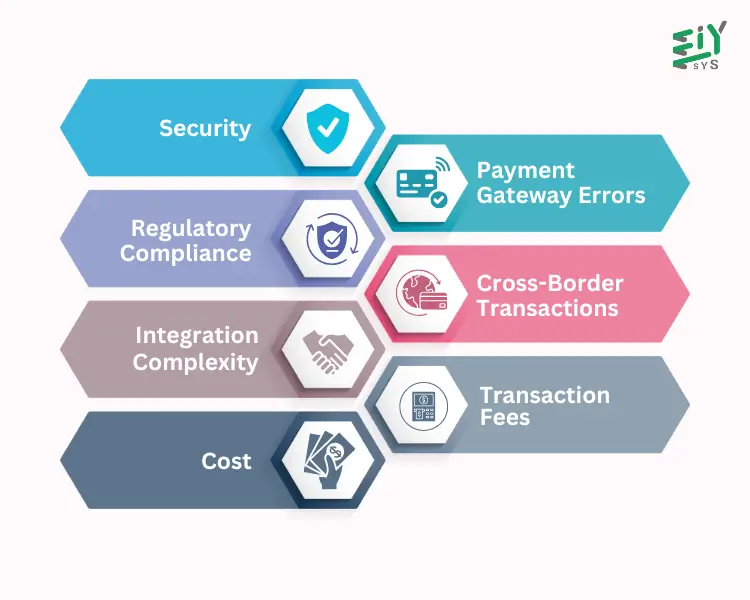
Payment gateways face numerous challenges, including:
- Security: With the increasing use of payment gateways, the risk of security threats such as data breaches, malware, and hacking rises. Merchants must ensure their processors follow strict security protocols to protect customer data.
- Payment Gateway Errors: Misconfigurations or technical issues in payment gateways can lead to payment failures. Users should check for updates or contact support for assistance.
- Regulatory Compliance: Payment processors must adhere to both local and international laws, such as data protection regulations and consumer rights.
- Cross-Border Transactions: Businesses engaged in global trade face challenges like currency conversions, different payment methods, and varying regulatory requirements across regions.
- Integration Complexity: Switching between payment systems can be technically challenging, requiring attention to detail and expertise.
- Transaction Fees: Merchants need to consider transaction costs, as well as setup, maintenance, and infrastructure fees when selecting a payment gateway
- Cost: Different gateways may have varying merchant discount rates (MDRs), impacting the fees merchants pay when processing payments.
How Does Payment Processing Work?
Payment processing involves a series of steps to ensure funds are transferred smoothly from consumers to businesses. Although point-of-sale (POS) transactions happen quickly, the underlying payment processing system is complex and involves multiple parties.
1. Authorization Process : When a payment is made, the merchant requests approval from the payment processor. The payment processor then sends the transaction details to the card association, which forwards them to the issuing bank. The bank reviews the transaction for sufficient funds and fraud risk. It either approves or declines the payment, then notifies the merchant bank, which informs the merchant of the decision.
2. Settling and Funding Process:The merchant submits the authorization request to the payment processor. This request is then passed to the card association and on to the issuing bank. The bank completes two key tasks: charges the customer for the transaction amount and transfers it to the merchant’s bank, deducting interchange fees. Finally, the merchant bank deposits the remaining funds into the merchant’s account, finalizing the transaction.
How Can Payment System Development Be Achieved?
Payment system development can be achieved by following these steps:
- Evaluate feasibility: Assess whether creating a custom payment gateway is a viable option.
- Design the software: Develop the necessary software for the payment gateway and choose the appropriate technology stack.
- Plan the implementation: Create a project plan and estimate the resources needed for the development process.
- Build the back end and interfaces: Develop the backend for payment processing and design the checkout interfaces.
- Establish storage: Set up secure storage for payment data that meets PCI DSS standards.
- Conduct QA: Implement quality assurance procedures throughout the payment gateway development.
- Deploy and integrate: Deploy the payment gateway and ensure it integrates smoothly with other systems.
These steps are essential for effective payment system development and help ensure a secure and functional payment gateway.
How Can A Payment Gateway Be Created?

The steps to create a payment gateway will vary based on your business needs, but the general process typically includes:
- Gateway features: Set up the payment gateway infrastructure by choosing a server to host the gateway, either on your own or through a third party. If you opt for your own server, consider the maintenance and auditing of any related data centers.
- Select a payment processor: A payment gateway works in tandem with a processor to complete online transactions. This processor can be a financial institution, a card network, or an independent provider. You’ll need to request the processor’s API documentation and follow their implementation guidelines, along with creating an external API to handle client payment data.
- Develop a customer relationship management (CRM) system: With the payment processing components in place, you’ll need a system for managing transactions and customer data. A robust CRM organizes customer information, including payment and contact details, in one central location.
- Incorporate security measures: When you build your own payment gateway, you are responsible for protecting cardholder data. Implementing security tools such as tokenization, which replaces credit card numbers with anonymous tokens, is essential. You will also need to comply with PCI DSS standards for handling credit card information.
- Acquire necessary certifications: Besides PCI auditing, you’ll need to obtain 3DS certification from EMV (Europay, Mastercard, Visa). This certification is required to process customer cards with chips.
The gateway features you implement should prioritize security and user experience to ensure a smooth and secure transaction process.
What Are The Key Features Of Secure Payment Solutions?
Secure payment solutions include a range of important features, such as:
- Payment Gateways: A payment gateway serves as a secure intermediary between the customer, business, and financial institutions, ensuring that payment information is transmitted securely.
- PCI DSS Compliance: The Payment Card Industry Data Security Standard (PCI DSS) outlines security protocols that ensure companies handling credit card transactions maintain a secure environment.
- Tokenization: Tokenization replaces sensitive payment data with a unique identifier, making it more difficult for criminals to misuse stolen information.
- Encryption: Encryption ensures that data is protected during transmission.
- Multi-factor Authentication: Multi-factor authentication confirms the identity of the user before granting access to sensitive information.
- Fraud Detection and Prevention: Advanced payment systems use fraud detection tools to spot and prevent fraudulent transactions.
- 3D Secure: 3D Secure is an added layer of authentication during online checkouts to verify the customer’s identity.
These secure payment solutions ensure that transactions across various payment methods, including credit/debit cards, contactless technology, and bank transfers, are protected.
Conclusion
EIY SYS recognizes the critical role of payment gateway creation in enabling businesses to offer secure and efficient online payment systems. The process of creating a payment gateway requires careful planning, the integration of essential gateway features, and strict adherence to security standards like PCI DSS and 3D Secure. By focusing on secure payment solutions, businesses can enjoy various payment gateway advantages, including improved security, faster transaction processing, and better customer experiences. However, there are also challenges in payment gateways, such as ensuring regulatory compliance and preventing fraud, which must be addressed during payment system development.
Furthermore, smooth payment processing is key to ensuring safe and seamless transactions, which can help businesses grow and build customer trust. By giving attention to these elements, businesses can establish a dependable and secure payment infrastructure that supports their e-commerce operations.
Frequently Asked Questions
A payment gateway is set up by linking a business's website or app to payment processors, ensuring secure transactions and complying with security standards like PCI-DSS.
Payment gateways offer better security, faster transactions, global reach, automated billing, fraud prevention, and insights into customer data.
Common challenges include security risks, regulatory compliance, handling cross-border payments, technical integration issues, and high transaction fees.
Payment processing involves checking transaction details with the bank, transferring funds, and depositing them into the merchant’s account after deducting fees.
Key features include secure payment gateways, PCI-DSS compliance, tokenization, encryption, multi-factor authentication, fraud detection, and 3D Secure for added protection.