


Digital transactions are experiencing rapid growth, but at the same time, cyber threats are increasing. Blockchain has developed into a critical requirement that protects your digital information and assets and your online business activities.
Reflect on the number of times you use digital systems in your everyday life. Users not only want the platform to give them security but also to be clear on what it is doing, and it is protecting their data; at the same time, it is allowing them to make payments and share information without any hesitation.
Why is Blockchain Security the Biggest Concern in Modern Blockchain Systems?
First of all, digital platforms today handle huge volumes of financial and personal data. Blockchain security has become the most important task for companies and software developers. The blockchain system functions as a decentralized ledger that records all transactions throughout its entire blockchain network. Attackers will attempt to use the loophole they discover in the blockchain system to either alter information or take advantage of system weaknesses.
Enterprise blockchain platforms now serve as the primary technology that companies use to handle supply chains, digital payments, and identity verification processes. The security threats have grown because of the rapid business expansion.
Most importantly, strong risk assessment and regular smart contract auditing are essential to protect digital systems. To put it simply, understanding what blockchain technology is helps organizations build safer platforms from the beginning.
What are the Most Common Threats In This Platform?
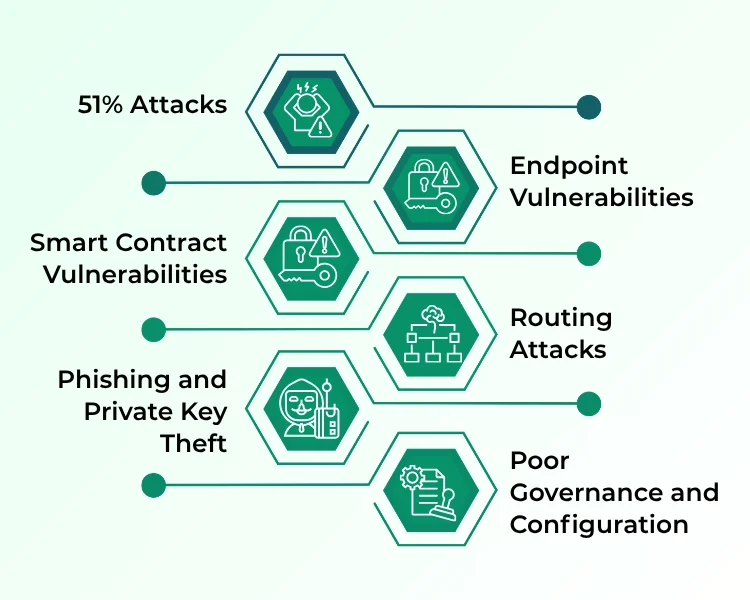
The weaknesses in blockchain systems stem from two main things, namely inadequate coding standards and ineffective risk assessment measures.
1. 51% Attacks
The attackers use this access to control system operations, which enables them to counterfeit transactions and execute double-spending attacks. The attacks target small blockchain networks because their limited processing power prevents them from defending against such security threats.
2. Smart Contract Vulnerabilities
Security vulnerabilities arise from badly constructed smart contracts, which create dangerous security risks. Smart contract auditing serves as an essential method to protect blockchain systems from security threats that need to be addressed.
3. Phishing and Private Key Theft
Phishing assaults targeting user credentials are a major security hazard through which the attacker can gain access to the victim’s credentials. Hackers often use social engineering to trick people into handing over their own secret blockchain network keys.
4. Endpoint Vulnerabilities
The network itself keeps its overall safety in place, yet attackers can still wiggle through system vulnerabilities because of those weak access points or poorly guarded gateways. The identification of system vulnerabilities requires effective risk assessment practices, which help organizations to discover their security risks.
5. Routing Attacks
Attackers have the ability to capture data that travels through the connections between blockchain network nodes. Enterprise blockchain networks experience growing reliability issues because of continuous operational disturbances.
6. Poor Governance and Configuration
Finally, weak governance policies can create security gaps within blockchain infrastructure. Without proper monitoring and thorough smart contract auditing, organizations might just gloss over vulnerabilities. Cybercriminals find it easier to hit the blockchain solutions.
How Can You Strengthen the Security Of Your Blockchain Applications?
Your system needs protection through the establishment of a secure blockchain infrastructure, which requires development from its initial stage. The system requires three components, which include secure coding methods, encrypted data transmission, and restricted user access.
Businesses need to conduct risk assessments together with security testing regularly. Poor security planning causes over 55% of blockchain projects to fail, according to Deloitte. Organizations using enterprise blockchain systems need to establish continuous monitoring for their blockchain networks.
Digital platforms receive essential protection through the process of smart contract auditing, which needs to occur on a regular basis. Many decentralized finance platforms have established automated security audit systems to conduct security checks before they launch new updates.
What Is the Importance of Protecting Blockchain Transactions?
The entire security infrastructure of blockchain systems depends on encryption technology as its fundamental protection element. The system secures information by transforming it into encrypted formats that only permitted users can access.
Data Protection Through Cryptography
- Encryption protects transaction data stored in the bank because it prevents unauthorized users from altering the data.
- The system protects all communication between blockchain network nodes, which enables secure transmission of data.
- Blockchain records sort of keep their integrity through a cryptographic hashing process, which ensures nothing changes later.
Identity and Access Security
- Encryption secures digital identities and private keys used within blockchain solutions. Because of this, only verified users can access the network.
- It also supports advanced risk assessment systems by verifying transaction authenticity.
- Encryption is done to help protect smart contracts during the process of smart contract auditing in order to preserve system security.
Blockchain Can Build Trust More Than You Think
Businesses can provide their customers with better digital services because they use enterprise blockchain platforms, which create more secure online environments. According to PwC research, nearly 84% of organizations currently conduct research into blockchain solutions, which they believe will enhance their operational transparency and security measures.
- Administrative Planning – With an intelligent agent in AI, you receive real-time data. This, in turn, brings about intelligent plans and excellent results.
- Productivity – Automation of AI processing cuts down on human manual work. Consequently, your team gets to concentrate on important tasks.
- Customer Interaction – Marketing automation driven by AI can personalize communication. This is one way of getting the audience closer to the brand.
- Consistent Testing – Running automated AI tests helps in obtaining a smooth performance at all times. Thus, it reduces errors and downtimes.
- Growing Operations – Automation of business processes with AI increases productivity without working more, leading to a gradual and steady expansion.
- Data Integrity- The fundamental design of blockchain technology prevents unauthorized modifications, which results in protected data security.
Conclusion
Digital systems today experience operational changes because blockchain technology now exists. The technology’s actual power lies in its ability to keep blockchain security running at the best levels, not only “working” but working well. When you run your systems safely, you get two benefits: transparent transactions and more user trust across your platform.
Organizations should hire professionals with specialized knowledge to establish a safe blockchain system. First, make contact with the Eiy Sys team, and allow us to present you with solutions that not only make your regular functions stronger but also support your business growth.
Frequently Asked Questions
Your content marketing strategy should align with better views, stronger engagement, and more conversations with customers. It should match the user preferences.
While blockchain is secure, vulnerabilities can still pop up in smart contracts, in related applications, or even on user endpoints, sometimes. Doing proper security audits and a full risk assessment process helps cut down that exposure or at least brings it under control.
One of the benefits of smart contract auditing is that it can identify bugs. As a result, smart contract auditing not only achieves the intended use of the contract but also mitigates the risk of huge financial losses.
AI, quality of voice, experience of user updates, and content-to-search intent are currently leading. These particular trends consistently appear and show how users discover the websites.

Jasleen Kaur
Hi, I’m Jasleen, a content writer and SEO enthusiast who loves turning ideas into engaging, reader-friendly content. I create blog posts, articles, and web copy that not only inform but also help websites rank higher on search engines. Combining st...read more