What is Blockchain e-Commerce?
Blockchain technology revolutionizes the way Blockchain and e-Commerce transactions and data are managed by providing a Decentralized payment systems, secure and transparent Digital commerce ledger. In contrast to traditional systems, blockchain distributes the ledger across a network of computers, each maintaining a copy. Every transaction is recorded in an immutable chain, where each new entry is linked to the previous one using cryptographic techniques. By doing this, a tamper-proof record is created that is resistant to fraud and unauthorized changes.
With blockchain, all participants in the digital commerce trends ecosystem – buyers, sellers and intermediaries – can view and verify transactions in real-time. Each transaction is permanently recorded and easily traceable, which reduces the risk of disputes and fraud. Additionally, blockchain uses smart contracts, which are self-executing agreements with predefined rules that are encoded into the blockchain, to automate and enforce contract terms without the need for intermediaries. As an example, a smart contract can release payment automatically once a product has been delivered, ensuring compliance and efficiency.
Also, blockchain facilitates the creation of decentralized e-commerce platforms where transactions are conducted directly between buyers and sellers, bypassing traditional intermediaries like banks or Decentralized payment systems processors. Faster processing times and lower transaction fees can result from this. Moreover, blockchain provides detailed, verifiable records of each step a product takes from production to delivery, extending its capabilities to Supply chain transparency management. By enhancing traceability, we are able to verify the authenticity of goods, prevent counterfeiting and ensure the quality of products.
What are the Blockchain Benefits in e-Commerce?
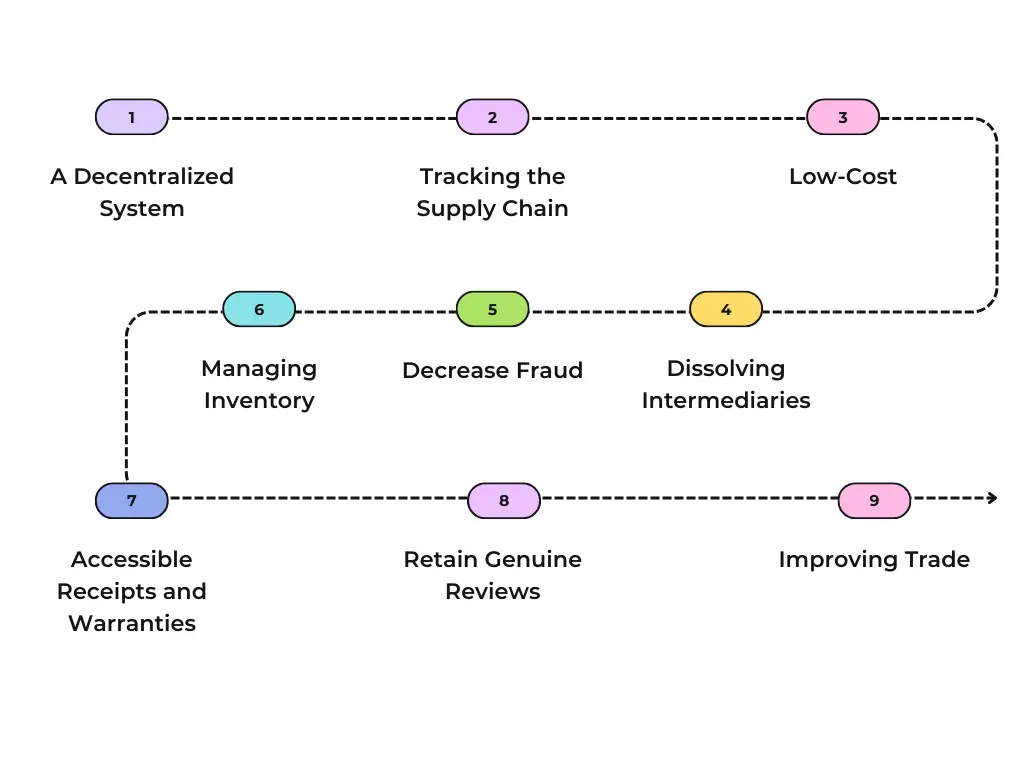
1. A Decentralized System
The most important parts of transacting data and money are transparency and traceability.
The distributed ledger feature of blockchain allows you to watch over Decentralized payment systems and data transactions securely. There can be no tampering with the trades and anyone caught doing so will be caught red-handed.
2. Tracking the Supply Chain
Producing goods, supplying them to manufacturers and selling them to consumers involve so many procedures that handling it all becomes complicated.
Using blockchain here ensures product traceability from origin to destination and if there is a mismatch between the items in the middle, it traces immediately. By handling the Supply chain transparency efficiently, you can overcome the stress.
3. Low-Cost
The cost-saving capabilities of Blockchain benefits are among its most important features. Due to the fact that crypto transactions are fee-free, cryptocurrency such as Bitcoin helps reduce costs.
Additionally, you don’t need to hire IT support staff to manage inventory, write product descriptions and upload images.
4. Managing Inventory
It is somewhat indispensable in the regulation of e-Commerce businesses to check your retail store’s list. This is an important aspect of increasing the customer base that cannot be denied.
With blockchain technology, retail stores can periodically check their content lists to ensure that supplies don’t run out.
5. Decrease Fraud
Purchasing products on behalf of legal account holders is one of the biggest challenges e-Commerce websites face. Fraudsters impersonate legal account holders, access usernames and passwords and make purchases on their behalf.
Here are some statistics to help you configure the Online retail scams that have taken place over time.
The number of consumers who lost money to Online retail fraud increased in 2018, according to a source.
Businesses that accept chargebacks lose 3.94 billion dollars for every dollar they accept.
There are 80% of traders who file disputes for illegal chargebacks.
By integrating Decentralized payment systems ledger technology into e-Commerce businesses and verifying all party accounts, fraud is greatly reduced and transacting disputes are eliminated.
6. Dissolving Intermediaries
Until blockchain arrived, the buyer and seller had to go through several intermediaries to complete a transaction involving finance, banking, contacts and retail.
As blockchain has replaced the centralized ledger of chained records with a Decentralized payment systems ledger, intermediaries are no longer required.
7. Accessible Receipts and Warranties
As a result, it is impossible to keep paper receipts of purchase and warranty for a long period of time, causing ambiguity as to the authenticity of the purchase and warranty coverage.
With blockchain technology, you don’t have to worry about storing receipts and warranties because it offers customers the convenience to keep them for as long as they need them.
8. Retain Genuine Reviews
Customers prefer to read product and service reviews before making an Online retail purchase because they can provide valuable information about the product and service at hand. As a result, we can see that the reputation of an organization is based on its reputation.
Using blockchain technology ensures the legitimacy of reviews and facilitates improving customer-business relationships.
9. Improving Trade
The Bitcoin technology boosts trade and Digital commerce beyond anything we could imagine, as it manages all the necessary equipment to increase sales in a short period of time.
Blockchain technology facilitates the development of businesses from Supply chain transparency monitoring to inventory management and fraud reduction through the removal of intermediaries.
What Companies Use Blockchain in e-Commerce?
In order to optimize their operations, businesses turn to technological innovations. For many e-commerce companies, it has become a popular choice. Blockchain technology has already been implemented by some of them in their E-commerce trends operations:
1. Starbucks
In order to track the journey of coffee beans from farms to stores, Starbucks is piloting a blockchain-based system. By enhancing transparency and supporting ethical sourcing practices, the company hopes to enhance customer satisfaction. As well as providing insight into the origins of coffee, it also allows consumers to make informed choices.
2. Walmart
Though Walmart is primarily a brick-and-mortar retailer, its Online retail presence is significant. As an early adopter of blockchain technology, Walmart tracks its Supply chain transparency using the technology. It allows the company to trace the origins of produce and other products. As an example, they have enhanced food safety and traceability by collaborating with IBM’s Food Trust Network.
3. Amazon Web Services
E-commerce businesses can set up Blockchain benefits using AWS’s blockchain templates. Consequently, innovation and growth are fostered in the sector. Businesses can explore new possibilities for their operations with the help of these templates and harness the Blockchain benefits.
Conclusion
The purpose of this article is to explore the Blockchain benefits and challenges of using Blockchain in E-commerce trends in 2023. Businesses thrive in the Digital commerce marketplace when blockchain enhances security, efficiency and cost-effectiveness. Supply chain transparency management and transparency are improved with it.
There are a number of challenges involved in implementing blockchain, including technical concerns, scalability issues and regulatory considerations. Planning and expertise are essential for successful navigation. There is a great potential for Blockchain in e-Commerce in the future. In the future, more innovative applications will revolutionize the industry as technology advances.
Explore blockchain’s possibilities in your e-commerce operations further. Using different technologies, including blockchain, Eiy sys has extensive experience developing e-commerce solutions of varying complexity. In order to drive your Blockchain and e-Commerce business forward, Eiy sys will help you leverage blockchain technology. Every step of the way, our developers team will be there to help you.
Frequently Asked Questions
In e-commerce, blockchain provides a decentralized and immutable ledger that can track transactions securely and prevent fraud.
By improving supply chain traceability and trust, blockchain can offer a transparent and verifiable record of goods' journey from origin to consumer.
In e-commerce transactions, smart contracts automate and enforce the terms of agreements between parties, reducing the need for intermediaries.
By eliminating intermediaries and reducing transaction fees, blockchain enables faster and more secure payment processing.