SEO vs PPC are both integral strategies in digital marketing, each offering unique benefits for businesses.It involves strategies like keyword optimization, creating high-quality content, improving site structure, and building backlinks to drive organic traffic over time.
SEO focuses on long-term growth and sustainability in search rankings.On the other hand, pay-per-click (PPC) advertising involves paying for ads that appear at the top of search engine results or on external websites. It offers immediate visibility and traffic, but requires an ongoing budget to maintain ad placements.
When comparing SEO vs PPC, SEO provides long-term benefits through organic reach, while PPC delivers quicker results. Both SEO vs PPC are essential components of a comprehensive digital marketing strategy, each with its own advantages depending on business goals and budget.
How Does Search Engine Optimization (SEO) Work?
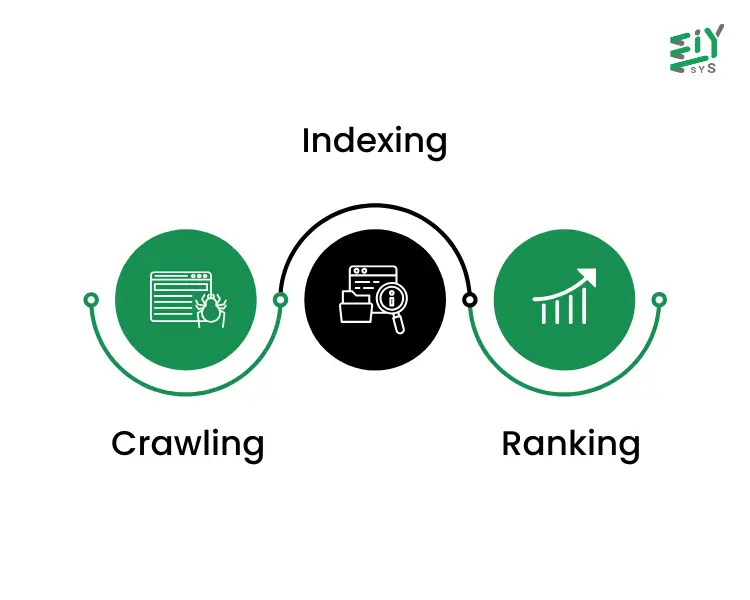
Search Engine Optimization (SEO) works through a three-step process: crawling, indexing, and ranking, which help search engines deliver the most relevant results to users.
1. Crawling
Search engines use web crawlers (like Googlebot) to explore new and updated web pages. These crawlers follow links on existing pages to discover additional content. They gather information about the content, structure, and relevance of each page. This process is crucial for Search Engine Optimization, as it helps search engines understand and index pages, ensuring they appear in relevant search results.
2.Indexing
Once a page is crawled, search engines determine if it’s valuable and relevant. Indexed pages are stored in a database for later retrieval. Pages with duplicate content or low value may not be indexed. Additionally, pages with insufficient inbound links or technical issues may also be excluded from the index.
3. Ranking
After crawling and indexing, search engines rank pages based on more than 200 ranking signals. These include factors like keyword relevance, page load speed, mobile-friendliness, backlinks, and content quality. User engagement metrics, such as click-through rates and time spent on the page, also play a crucial role in determining a page’s ranking. Effective Search Engine Optimizationensures that these signals are optimized to improve a page’s visibility and ranking in search results.
What Are The Benefits Of Pay-Per-Click Advertising?
Pay-Per-Click (PPC) Advertising offers businesses a range of benefits that can help them reach their target audience effectively and achieve their marketing goals.
1. You set the maximum budget for your ads. With other types of advertisements, you are locked into a specific rate. Pay-Per-Click Advertising enables you to work within your budget. That means whether you’re a multinational conglomerate or a mom-and-pop in a small town, you can constantly change your ad budget within your limits.
2. You only pay when someone clicks your ad. With many types of advertising, you pay the same amount for your ad spot, no matter how many people see it or contact you because of it. One of the major PPC benefits is that you pay per click.
3. You can easily test different ads. Every Pay-Per-Click Advertising provider tracks stats on your ads so you can refine your marketing strategies and see the benefits of PPC advertising in action. All of them track the same basic stats, like clicks and how much you’re charged, as well as provider-specific information.
4. You can gain more brand recognition As your PPC ads show up more frequently, more people will see (and later recognize) your brand. That’s great for building your company’s reputation online, even if people don’t click on your ads at first.
Which Is Better For Long-Term Growth: Organic Traffic Or Paid Traffic?
Organic Traffic refers to traffic that lands on your website through unpaid search engine results (such as Google, Bing, or Yahoo). The primary benefit of organic traffic is that it brings highly qualified leads who are actively searching for products or services you offer. Organic Traffic vs. Paid Traffic often presents a choice between long-term sustainability and immediate visibility.
Paid Traffic, on the other hand, involves paying for ads that target specific demographics or keywords, putting your business in front of a larger audience right away. While paid traffic provides immediate results and more control over targeting, it requires ongoing investment. Once you stop paying for ads, the traffic stops, meaning it lacks the lasting impact that organic traffic offers.
In the debate of Organic Traffic vs. Paid Traffic, paid traffic is ideal for short-term goals or when you need quick visibility, but for long-term growth, it can become expensive without continuous optimization and investment. Paid traffic can complement organic strategies by driving short-term results and increasing brand awareness. A balanced approach combining both can yield optimal results for sustained growth.
How Do You Measure Digital Marketing ROI?
Digital Marketing ROI measures the revenue directly generated by your marketing efforts, minus the costs spent on those efforts, divided by the marketing investment. The formula for Digital Marketing ROI is:
- ROI = (Return – Initial Investment) / Initial Investment * 100
This gives you the percentage increase or decrease in your original investment. For a more simplified approach, you can calculate:
- ROI = (Net Profit / Total Cost) * 100
To project future ROI, estimate the number of leads you expect, then multiply by your conversion rate and average purchase price:
- Predicted Return = (Number of Leads * Lead-to-Customer Rate * Average Sale Price)
For example, if you expect 1,000 leads, a 25% conversion rate, and an average sale price of $50, the predicted return would be $12,500. If your predicted marketing cost is $5,000, then your predicted ROI would be 150%.
- Predicted ROI = [(Predicted Return – Marketing Cost) / Marketing Cost] * 100
While ROI is a key indicator of success, it’s important to supplement it with other metrics to get a more comprehensive understanding of your Digital Marketing ROI performance.
Conclusion
At EIY SYS, we specialize in helping businesses navigate the digital landscape with a balanced approach to SEO vs PPC. By leveraging both Search Engine Optimization and Pay-Per-Click Advertising, we drive sustainable growth and immediate visibility.
Understanding the dynamics of Organic Traffic vs. Paid Traffic and measuring Digital Marketing ROI are essential for effective marketing strategies. Through Online Advertising Comparisons, we help you choose the right approach for your goals.
Frequently Asked Questions
SEO (Search Engine Optimization) focuses on long-term organic growth and improving search rankings without paying for placement. PPC (Pay-Per-Click Advertising) involves paying for ads that appear at the top of search results or on websites, providing quicker visibility and immediate traffic but requiring an ongoing budget.
SEO works through three steps: crawling, indexing, and ranking. Crawlers explore and gather information from web pages, which is indexed and ranked based on over 200 signals like keyword relevance, content quality, and backlinks.
PPC offers several advantages, including the ability to set a budget, pay only when someone clicks your ad, easily test different ads, and increase brand recognition through frequent exposure. It’s ideal for quick results and targeting specific audiences.
Organic Traffic comes from unpaid search results and provides long-term, sustainable growth. Paid Traffic involves paying for ads and offers immediate visibility but requires continuous investment. A combination of both can drive optimal results for short- and long-term growth.
Digital Marketing ROI is calculated by subtracting the cost of marketing efforts from the revenue they generate, then dividing by the marketing investment. This formula helps measure the effectiveness and profitability of digital marketing campaigns.