The Psychology of Social Media is an incredibly influential factor in determining the way individuals interact with content, make choices, and engage with brands. Every purchase, share, comment, or like has its roots in psychological drivers including curiosity, social proof, and immediate satisfaction. Companies that can get inside this mindset can design powerful content that grabs attention, engenders trust, and inspires people to act. By connecting with human feelings and cognitive biases, brands can greatly develop their web presence and shape consumer decisions.
Features such as emotional storytelling, FOMO (Fear of Missing Out), and social proof increase the engagement and persuasiveness of content. Humans are naturally drawn to posts that stir emotions, generate excitement, or are extremely relatable. Moreover, graphics that are pleasing to the eye, powerful headlines, and interactive features invite more interactions by making content dynamic and engaging. The more personal and engaging a brand’s content is, the more likely users are to engage with it and act upon it.
By using psychological principles, companies can improve engagement, grow their audience, and improve conversions. Easy but efficient techniques such as establishing urgency in offers, creating community through conversations, and making the content appear scarce or exclusive can make fans into brand lovers. Knowing what makes individuals think and act on social media enables brands to formulate strategies that strike an emotional chord, compel significant interaction, and foster lasting success.
Why Do Marketing Strategies Utilize User Behavior for Engagement and Sales?
Marketing strategies utilize user behavior to better understand how people interact with content, make decisions, and engage with brands. By analyzing patterns, preferences, and online actions, businesses can create campaigns that resonate with their audience. Understanding what captures attention and drives interactions helps brands craft more effective engagement tactics that increase visibility and conversions.
Engagement-driven marketing focuses on using social proof, personalized content, and interactive experiences to boost audience participation. When businesses align their strategies with user behavior, they enhance brand awareness and encourage deeper connections. Features like targeted ads, influencer collaborations, and behavioral analytics help brands deliver content that feels relevant and valuable, increasing both engagement and sales.
By adopting user behavior insights, businesses can refine their marketing strategies to improve customer retention and build long-term loyalty. A data-driven approach helps companies create content that not only attracts new customers but also keeps existing ones engaged. This leads to stronger customer relationships, improved brand trust, and sustainable business growth.
How Does the Psychology of Social Media Influence Likes?
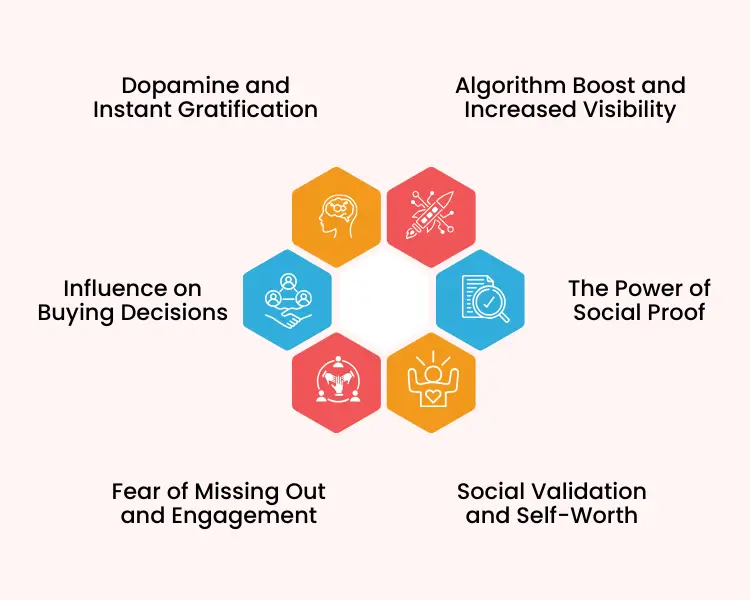
1. Dopamine and Instant Gratification
Social media likes to trigger the release of dopamine, a chemical in the brain associated with pleasure and motivation. This creates a sense of instant gratification, making people feel rewarded and valued. Each like reinforces user behavior, encouraging more frequent posting and interaction. Businesses leverage this psychological response as part of their marketing strategy to boost engagement and increase audience participation.
2. Social Validation and Self-Worth
Likes act as a form of social validation, shaping how people perceive themselves and their online presence. A high number of likes can boost self-esteem, while fewer likes may lead to self-doubt. Brands use engagement tactics like interactive polls and personalized content to enhance audience connection and maintain customer retention by fostering a sense of community.
3. The Power of Social Proof
People are more likely to engage with content that already has high interaction, a concept known as social proof. When a post receives many likes, it signals popularity and credibility, influencing others to engage as well. Businesses use this effect to build brand awareness and establish trust, making their content more appealing to potential customers.
4. Fear of Missing Out (FOMO) and Engagement
Social media fosters a Fear of Missing Out (FOMO), encouraging users to engage with popular posts to stay connected. Brands integrate FOMO-driven engagement tactics like limited-time offers and exclusive content to increase interactions. This psychological trigger keeps users active and contributes to stronger customer retention by making them feel involved and valued.
5. Influence on Buying Decisions
For businesses, likes serve as a trust signal, influencing consumer choices. A high number of likes increases brand awareness and creates the perception of reliability. Users associate popular brands with quality and trust, making them more likely to purchase, follow, or recommend a product. This aligns with an effective marketing strategy that converts engagement into sales.
6. Algorithm Boost and Increased Visibility
Social media platforms prioritize highly liked posts in their algorithms, boosting brand awareness by making content more discoverable. Posts with high engagement are featured in feeds, explore pages, and search results, leading to greater reach. Brands that implement strong engagement tactics and optimize their marketing strategy see increased visibility, audience growth, and long-term success.
What Psychological Factors Influence People to Click, Like, and Buy on Social Media?
Understanding the psychology of social media helps brands create content that encourages users to click, like, and buy. People engage with posts based on emotions, social validation, and persuasive tactics that shape their user behavior. By using strategic engagement tactics and a strong marketing strategy, businesses can increase brand awareness, build trust, and drive higher conversions. Below are key psychological factors that influence social media interactions:
- Social Validation – People are more likely to engage with content that already has high likes, shares, or comments, as it signals popularity and credibility.
- Emotional Appeal – Content that triggers emotions like happiness, excitement, or curiosity drives higher engagement and encourages users to take action.
- FOMO (Fear of Missing Out) – Limited-time offers, flash sales, and exclusive deals create urgency, motivating users to click and buy.
- Personalization – Posts tailored to user interests, behaviors, and preferences increase engagement and strengthen customer retention.
- Engagement Tactics – Interactive content such as polls, quizzes, and challenges encourages users to like, comment, and share.
- Influencer Endorsements – Recommendations from trusted influencers build brand awareness and influence purchasing decisions.
- Visual Impact – High-quality images, videos, and eye-catching designs grab attention and increase the likelihood of clicks and shares.
- Psychological Triggers in Copywriting – Words like “exclusive,” “limited,” or “best-selling” create curiosity and persuade users to take action.
- Community and Belonging – Users engage with brands that foster a sense of community, leading to long-term loyalty and increased conversions.
- Marketing Strategy and Social Proof – Reviews, testimonials, and user-generated content reinforce trust and influence purchasing behavior.
Conclusion
In Conclusion, The Psychology of Social Media plays a crucial role in shaping how people interact with content, make decisions, and engage with brands. By understanding user behavior, businesses can implement effective engagement tactics that capture attention, build trust, and encourage actions like clicking, liking, and buying. A well-crafted marketing strategy leverages emotional triggers, social proof, and personalization to enhance brand awareness and drive meaningful interactions.
At Eiysys, we specialize in the Psychology of Social Media, using proven engagement tactics and data-driven marketing strategies to enhance brand awareness and customer retention. Our expertise in analyzing user behavior helps businesses maximize engagement, drive conversions, and build lasting relationships.
Frequently Asked Questions
Psychology plays a crucial role in social media engagement by tapping into human emotions, cognitive biases, and social behaviors. Factors like reciprocity, social proof, and fear of missing out (FOMO) drive people to interact with content, like posts, and make purchasing decisions.
Psychological triggers such as curiosity, urgency, exclusivity, and emotional storytelling encourage people to click on posts. Using compelling headlines, intriguing visuals, and strong call-to-action (CTA) buttons can also significantly increase engagement.
People like and share content for various reasons, including self-expression, social validation, and the desire to inform or entertain others. Content that evokes strong emotions—whether happiness, surprise, or even anger—tends to get more shares and interactions.
Businesses can leverage psychological principles like scarcity (limited-time offers), authority (expert endorsements), and social proof (customer reviews and testimonials) to influence buying decisions. Personalization and targeted messaging also enhance conversion rates.
Colors and design impact user perception and emotions. For instance, red creates urgency, blue builds trust, and yellow evokes optimism. A visually appealing and well-structured post can grab attention quickly and encourage users to take action