When you search for something on Google, you will see thousands of results. Google ranks different web pages on search engine result pages (SERPs) and you tend to click on the highest-ranked links.
Do you know why certain websites appear at the top of SERPs? It’s because of on-page SEO, which has the potential to improve your search engine ranks and attract a large number of users to your website. It is one of the most important components for increasing web visibility.
Marketers and website owners are responsible for all on-page elements. They tailor each component of the process to the intended audience, from topic selection and content creation to user experience enhancement. They select suitable keywords to improve a website’s ranking.
How is On-Page SEO Beneficial for company websites?
On-page SEO seeks to boost organic website traffic by helping you rank better in search engine results. A more thorough on-page SEO approach will take into account search intent, target keywords, internal links and high-quality content. Simply put, if you want to rank higher on Google and other search engines and compete with other websites, you must invest in on-page SEO. The advantages of on-page SEO for company websites are as follows:
-
Rank higher in SERPs
On-page SEO’s primary purpose is to improve the ranking of individual website pages in search results. Increasing your Google ranks can significantly improve organic website traffic, providing you with additional opportunity to convert visitors.
-
Improve local searches
On-site Local SEO can help you rank for a specific keyword depending on a user’s search intent. For example, someone looking for a hamburger could type the query “hamburger” and get nearby results.
-
Increase organic traffic
As previously said, on-page SEO can boost organic traffic by helping a certain page on your website rank higher in SERPs. Writing accurate meta descriptions and focusing on your page’s title to guarantee you rank for relevant keywords will boost traffic and assist search engine visitors in finding what they are looking for.
Why is On-Page SEO Important?
Let’s talk about why on-page SEO is vital. Blogs, URLs, meta tags, keywords, titles, and other on-page features provide search engines with information about your website. Google and other search engines evaluate these on-page components to determine whether the website matches the user’s search intent and delivers value to visitors and customers. If it does, search engines will serve it to people to answer specific questions.
Having a nice website isn’t enough. To keep up with the always changing Google algorithm, you must focus on a variety of on-page features. Because search engines value user experience and ‘people-first content’ when ranking web pages, you must continually optimize your website to rank better and generate organic visitors. Furthermore, you must provide relevant and useful information to meet user purpose and establish legitimacy. As a result, we employ on-page SEO to optimize a website for both users and search engines, demonstrating its relevance and utility for search engine rankings.
On-page SEO optimization comprises adjustments and updates to visible website elements. Website owners have full control over all aspects of on-page SEO. As a result, they must do the task correctly.
Here are the main reasons why on-page SEO is important:
- When we include relevant keywords in titles, headers, meta tags, and descriptions, we ensure that our content matches search queries, resulting in targeted audience visits to the website.
- On-page SEO improves the possibilities of ranking better in SERPs and makes the website more noticeable.
- Google and other search engines prefer mobile-friendly websites when ranking pages. On-page optimization makes a website mobile-friendly, improving user experience and SEO.
- A website that has been optimized and structured makes it easier for users to navigate.
- Optimized on-page features provide your company a competitive advantage and establish it as a trustworthy brand in your industry.
What are the Best Techniques for On-Page SEO?
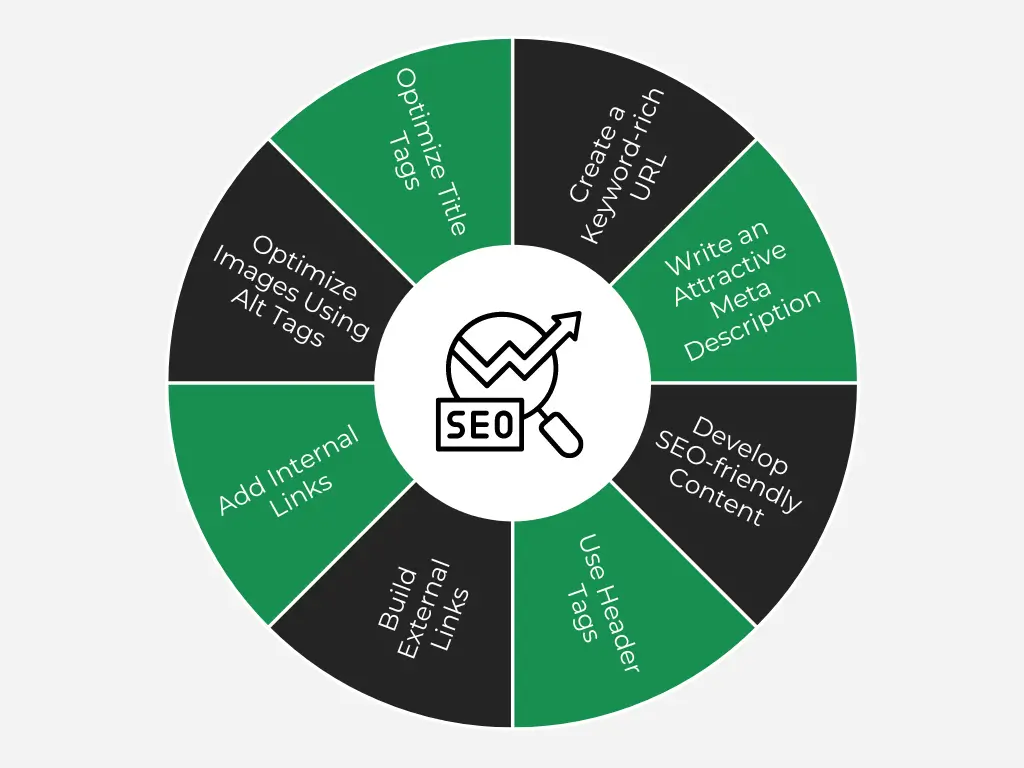
1. Optimize Title Tags
A page title, or content title, is a section of HTML code that displays your page’s primary heading. This title appears in browser tabs, search engine results, and social network posts. It plays a crucial role in attracting users to click on your page.
Consider these variables when creating title tags:
- Keep it Brief: Your title should be between 50 and 60 characters to prevent Google from truncating it in search results.
- Use Keywords: Include relevant keywords to help both readers and Google understand your website’s focus. Avoid keyword stuffing; instead, use them naturally.
- Be Descriptive: Ensure your title accurately conveys the page’s content or purpose.
- Be Unique: Craft a distinct title for each page to clearly communicate its goal to Google.
- Avoid Capitalization: Do not capitalize every letter in the title.
- Include Your Brand Name: If feasible, incorporate your brand’s name in the title.
2. Create a Keyword-rich URL
The URL is one of the most important on-page SEO elements and should be straightforward and concise. Google recommends URLs that reflect the content, helping readers understand what to expect.
- Keep It Simple: Avoid complex addresses; use clear and descriptive URLs.
- Avoid Unnecessary Elements: Don’t include entire phrases, random digits, or publication dates. Instead, modify automatically generated URLs before publishing.
- Use Target Keywords: Incorporate keywords in the URL to align with the content theme, enhancing your SEO efforts.
3. Write an Attractive Meta Description
A meta description is an HTML element that provides a concise overview of the page, describing to users and search engines what to expect.
- Encourage Clicks: A captivating and accurate summary can inspire users to click on the link.
- Placement: Meta descriptions appear below the page title on SERPs and can influence user actions, even though they have little effect on rankings.
- Stay Relevant: If your meta description doesn’t match user intent, Google may generate its own.
4. Develop SEO-friendly Content
Creating high-quality, optimized content that aligns with user intent is crucial for on-page SEO.
- Incorporate Keywords Naturally: Add target keywords to your URL, title, and headers, ensuring they fit seamlessly within the content.
- Conduct Keyword Research: Identify relevant phrases and sort them by search volume and competition to inform your content strategy.
- Focus on Long-tail Keywords: Start with less competitive long-tail keywords, especially if you’re a startup, before transitioning to more competitive terms.
5. Use Header Tags
Headings allow users to easily skim your content for helpful information while also helping Google understand the structure of your page and its relevance to user searches.
6. Build External Links
External links from authoritative sites boost your credibility and trustworthiness. They enhance user experience and improve search rankings.
7. Add Internal Links
Internal links help users navigate your site and allow search engines to understand the relationships between pages.
- Facilitate Crawling: Allow Google’s crawlers to find and navigate new pages.
- Improve Navigation: Help users navigate the website.
- Clarify Structure: Help search engines comprehend your website’s structure.
- Enhance Page Value: Show Google that the linked page is useful.
9. Optimize Images Using Alt Tags
Images play a role in on-page SEO. Optimize them by adding descriptive alt text for better accessibility and SEO.
- Accessibility: Allow users with screen readers to hear image descriptions.
- Search Engine Crawlers: Provide content for crawlers to index.
Conclusion
On-page SEO is crucial for speeding business growth and improving search engine rankings. I hope this blog helped you comprehend the notion of on-page SEO and provided answers to common questions. By focusing on various on-page components and elements, you can improve your website’s visibility and credibility in the digital environment.
Though it faces a number of challenges, it is a shining star in the Flutter sky. It is up to you to choose the right star from among them. We Eiy sys will leverage this technology to advance a step ahead of others. Do you feel ready? Then buckle up and begin your journey with Eiy sys.
Frequently Asked Questions
On-page SEO is the process of optimizing individual web pages to improve their search engine rankings and user experience by focusing on content, HTML elements and website structure.
Title tags are important because they notify search engines and people what the website is about; adding relevant keywords will help you rank higher on SERPs.
Meta descriptions provide a summary of the page content in search results, which influences click-through rates but does not directly affect rankings.
To increase engagement, create high-quality, relevant content that organically integrates target keywords, structures the text with headings and addresses user intent.