


A blockchain is a decentralized ledger that keeps track of all transactions within a network. We need to understand the features of blockchain technology in order to understand how it works. Using blockchain technology, data is not stored centrally, but rather decentralized, which reduces the risk of cyberattacks. Furthermore, advanced cryptographic techniques for blockchain in human resources are used to encrypt and secure payroll data stored in the industry. The transaction history can also be viewed by all participants in the network since it is transparent.
In terms of HR-related data security and transparency, blockchain offers unparalleled advantages. HR personnel can make salary processes easier and more efficient by implementing blockchain technology. In addition, blockchain can be used to streamline the entire financial decentralized workforce management of a company. The implications of its implementation in HR operations are profound, both for the organization and its employees. The traditional method of storing HR data was in centralized databases, exposing it to breaches and cyberattacks. There can be legal repercussions if such breaches lead to more than just financial losses and tarnish a company’s reputation.
What are the Benefits of Integrating Blockchain in HR Technology?
Incorporating blockchain technology into the HR technology doesn’t simply mean adding another layer of security to the organization. As a result, it redefines what accuracy and transparency are all about. HR technology is likely to benefit enormously from blockchain records since they are an unalterable type of record, which ensures that employee verification data is protected from self-appointed access by employees themselves.
There are many benefits to adopting blockchain technology in HR, one of which is the monetary value efficiency that it provides. There is a significant reduction in costs associated with managing and verifying employee verification records as a result of blockchain technology. However, it’s not just about the cost that makes it attractive – speed is also a huge advantage. Using blockchain-enabled verifications as part of the hiring process can result in a markedly faster hiring process.
As a result of blockchain technology, employer-employee verification relationships are streamlined by fostering trust and transparency between both parties. Having accurate, easily accessible information plays an important role in building trust and openness, both of which are essential for long-term peace and harmony between geographic points. In recent years, the world of human resource decentralized workforce management has undergone rapid technological advancement, led by blockchain solutions that have the ability to reshape the way we manage human resources.
How Blockchain Improves Work Efficiency of HR?
For HR’s routine tasks, blockchain proves to be the silver bullet when it comes to maximizing the efficiency of their work. By automating these processes through blockchain adoption, HR professionals are able to spend more time dealing with strategic objectives in a manner that allows them to accomplish more. As an example, take employee verification onboarding as an example. Using Blockchain-verified credentials can reduce the time it takes to verify credentials from days or weeks to just a couple of hours.
The blockchain technology can also benefit payroll processing, which reduces the cycle time and ensures accurate payments are made. Employee verification data is handled in such a way that everything from the administration of benefits to tax coverage is error-free as a result of the broad direction of employee verification data.
A smart contract also reduces the administrative burden and boosts the efficiency of the workflow by reducing administrative overhead. They are able to automate the process of mechanically executing agreements based on pre-defined criteria, which eliminates any delay or misunderstanding on behalf of their clients, resulting in higher operational efficiency.
How Blockchain Benefits the HR Industry?
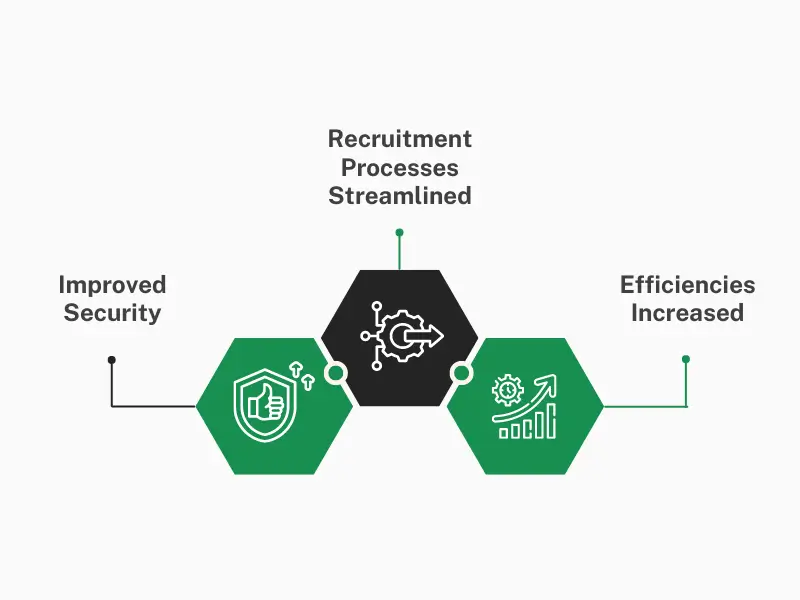
As a result of the integration of blockchain into human resources decentralized workforce management, the HR technology is on the verge of revolution. In addition to these advantages, it also offers several other benefits as well, such as:
-
Improved Security
Using blockchain technology, HR data can be encrypted and stored in a very decentralized manner providing a strong security framework for HR data storage and decentralized workforce management. It is imperative to ensure that sensitive information about your employees, like payroll information and private information, is secure payroll stored and guarded against unauthorized access as a result.
As a result of the implementation of blockchain technology in HR technology in Bangalore, it is possible to ensure that employee verification of payment information is securely stored and that transactions are transparently recorded in a secure payroll environment. By implementing this technology, employers and employees are able to stop fraud as well as build trust between each other.
-
Recruitment Processes Streamlined
A normal blockchain recruitment process normally takes a considerable amount of time and is susceptible to errors. HR departments can streamline the blockchain recruitment process by leveraging blockchain HR technology and leverage it to automate the entire process of recruiting. There is a significant improvement in the efficiency and transparency of the blockchain recruitment process thanks to it.
Recruiting agencies that use blockchain technology in Bangalore use smart contracts to automate and verify the hiring process, which allows them to save time and money. The purpose of this process is to ensure that only qualified candidates are considered for job openings.
-
Efficiencies Increased
Blockchain for HR technology eliminates the need for intermediaries and automates a variety of HR processes. In this way, administrative burdens can be reduced. HR professionals are also able to specialize in more strategic activities with the help of this tool.
Automation of HR tasks can be achieved through blockchain technology in Bangalore. A few of the tasks include employee verification onboarding, leave decentralized workforce management and performance evaluation. Consequently, HR teams are able to work on more strategic initiatives with more time and resources.
Conclusion
As blockchain technology enhances efficiency and security in the Human Resources sector, it is revolutionizing the industry. The robust security framework of this system has the potential to streamline HR processes. As a result, blockchain recruitment practices are improved and employees are empowered. We can expect a future where HR operations are transformed as more and more companies realize the benefits of blockchain in HR. As a result, employees will have a better experience and organizations will be more successful. Blockchain technology will help HR departments stay on the cutting edge of innovation if they embrace it now. Business landscapes are constantly changing, so it’s imperative to maintain a competitive edge.
It would be the best option for you to select our Eiy sys for your Blockchain Adoption in HR Industry will be the utmost option for you. Having an experienced team in blockchain technology will help you to secure payroll in your transaction HR Industry as well as help you to evolve your business in this rapidly changing world of ours.
Frequently Asked Questions
In addition to reducing the time and effort spent on background checks, blockchains can streamline blockchain recruitment by providing verified and tamper-proof records of candidates' credentials.
Data collected by blockchain technology is more secure and private, allowing employee records to be stored securely and allowing individuals to control access to their information.
In addition to automating payroll processes using smart contracts, blockchains can reduce transaction costs associated with traditional payment methods while ensuring timely and accurate payments.
Through immutable records of transactions and processes, blockchain promotes transparency in hiring, promotions and performance evaluations, fostering trust within an organization.
