Currently, the fintech security concerns (fintech) sector is expanding rapidly and fundamentally transforming the way money is managed and handled. The convenience of online banking has been replaced by digital transactions and holding investment platforms.
What can FinTech Do with Artificial Intelligence?
The financial technology (FinTech) sector particularly relies on security when it comes to AI. By giving FinTech cybersecurity priority and enlisting FinTech companies’ support, they may be able to cope with the hazards.
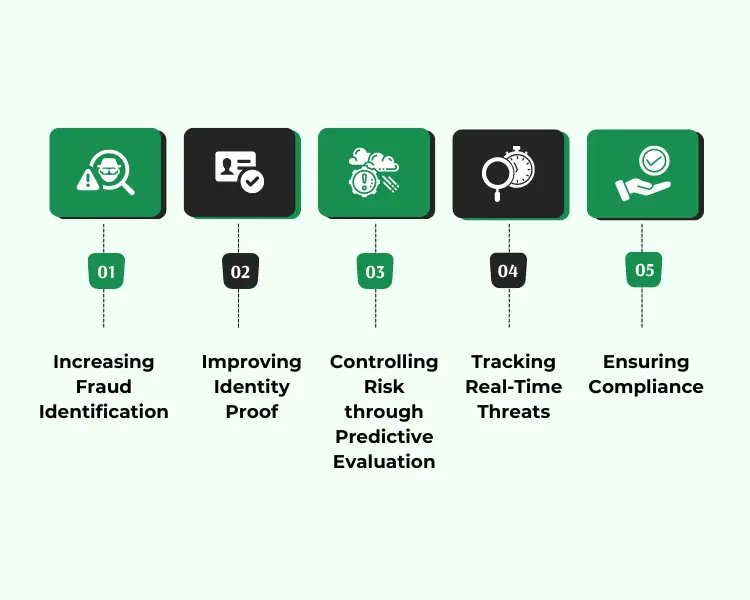
Using AI in fintech can be viewed from the following perspectives:
1. Increasing Fraud Identification
- There is no doubt that fraud is the biggest security challenge facing fintech, which impacts the average person. In the past, slow outdated techniques were used to commit fraud, but these may be used today.
- However, artificial intelligence (AI) can discover trends that may indicate fraud from large amounts of data. The use of artificial intelligence is increasing in accuracy and reducing the likelihood of financial fraud.
2. Improving Identity Proof
- It is crucial for financial companies to have security users. It is possible to track personal data by using AI-based identity verification systems, such as speech patterns, fingerprints and facial recognition.
- With these solutions, which are more precise and trustworthy than manual verification, you get closer to the truth and reduce the risks and threats associated with it.
3. Controlling Risk through Predictive Evaluation
- Foreseeing possible risks is made easier with AI. As a result, the fintech security challenge may be improved.
- Additionally, by tracking past transactions and user behavior, they can reduce the risk associated with lending to a particular individual or company
- By using this function, you’ll be able to make wise decisions and improve your financial security.
4. Tracking Real-Time Threats
- Fintech cybersecurity threats are constantly evolving, making it challenging for potential attackers to remain on top of the game.
- A fintech cybersecurity issue can be spotted by artificial intelligence (AI) by assessing the operations and looking for unusual behavior.
- As an additional benefit, AI can alert security personnel about threats instantly, so that they can take immediate, efficient action to eliminate them.
5. Ensuring Compliance
- It is well known that laws and regulations are subject to frequent changes, which makes compliance with regulations challenging.
- Based on their unique identification, artificial intelligence can constantly monitor changes and ensure all procedures comply with the latest standards. Security is improved as a result of this compliance.
How Are FinTech and AI Affecting Business?
As a result of the combination of financial technology (FinTech) and artificial intelligence (AI), the corporate sector has changed over the years. These developments increase financial services’ effectiveness while also creating new challenges and opportunities. One of the most significant impacts of this integration has been in fintech security concerns.
Furthermore, all financial institutions rely on artificial intelligence (AI) to predict market movements, offer personalized financial advice and provide enough client service through chatbots. Furthermore, it makes financial services more accessible and easier to use.
As a result of their ability to process large quantities of sensitive data, fintech companies often become targets of cyberattacks. In order to reduce risk, artificial intelligence does the following:
- Acts of fraud should be screened and guarded
- The optimization of the verification method
- Maintaining a close eye on transactions
- Keep an eye out for patterns that are unusual and could indicate danger.
The security challenges associated with fintech are still a major concern, in spite of all these benefits. Companies receive assistance in continuously modifying their security measures to ensure the protection of their customers’ money and personal information from cyber threats.
What are the Obstacles Fintech Faces with AI?
The field of finance technology (fintech) is booming thanks to artificial intelligence (AI), which can offer enhanced customer service, identify fraudulent behavior and give customized financial advice to customers. Incorporating AI into banking isn’t without challenges, however. The biggest one is security.
It is also challenging to keep fintech’s security strong. Fintech security concerns are in high demand because of the enormous dangers and attraction of financial data to hackers.
In addition, because AI systems handle and analyze huge quantities of data, they are prime targets for cyberattacks. Moreover, ensuring the security of the systems is one of the most difficult challenges in the current environment.
Further significant Obstacles to AI’s integration into Finance Include:
Challenges Related to Fintech Security Challenges
1. Fintech Cybersecurity: The use of artificial intelligence (AI) facilitates the identification of threats, but it is not impervious to sophisticated AI-driven attacks, which explains fintech cybersecurity’s competitiveness.
2. Information Privacy: The financial sector relies heavily on data privacy. Money and confidence may be adversely affected by any problem or breach of the law.
3. Legal Conformance: To ensure conformity, a variety of area regulations must be identified, ongoing monitoring must be made and necessary adjustments should be made as necessary.
4. Fairness and Sensitivity in Treatment: Discrimination might arise from unfair financial decisions.
5. Preventing Complexity: Small fintech companies face challenges in developing and maintaining AI systems because they lack the expertise and resources necessary.
Conclusion
In summary, the comprehensive guide on incorporating AI for fintech security concerns emphasizes the technology’s critical role in preventing online attacks in the financial sector. AI can help fintech organizations protect confidential data and maintain client confidence by detecting and addressing precise risks.
The advancement of technology has been continuous, to the best of our knowledge. By following this guide, you can easily integrate current AI technologies and ensure on-going innovation and dependability as security threats evolve.
As a leader in transforming fintech security challenges, Eiy sys uses the latest artificial intelligence technologies. Using AI advancements developed specifically for the finance sector, Eiy sys promotes data security and combats cyber threats. We can also advance financial security by utilizing the skills and expertise of our knowledgeable workforce through AI.
Frequently Asked Questions
Security in fintech refers to the measures and practices implemented to protect financial technology applications and platforms against cyber threats, unauthorized access and fraud. Ensures confidentiality, integrity and availability of financial data.
In fintech, security is essential due to the sensitive nature of financial data, including account details, personal information and transaction records. The consequences of a breach can include financial loss, identity theft and reputational damage.
MFA requires users to provide two or more verification factors in order to gain access to their accounts. A password is a common factor, as is a mobile device (a mobile device) and a biometric characteristic (a biometric characteristic).
During encryption, data is converted into a code so that it can't be accessed by unauthorized people. Cryptography is used in fintech to secure data during transmission (e.g., SSL/TLS for web transactions) and storage (e.g., AES encryption for databases).