


In the digital space, which is highly populated today, making predictions about the ranking of your content through guesswork cannot be considered a way out. What you need is clarity, actual figures, actual behaviour, actual insights. Data-driven marketing comes to your rescue at this point. It helps you discover the words the audience types in the search bar, the links they click, and the reasons why they pick your company instead of the competitor’s. Once you get this kind of insight, you do not feel stuck anymore, but rather start making choices that will eventually bring your rankings up.
However, there is one thing that most companies neglect: your data is not only information but also a narrative about your buyers. Every keyword, click, bounce, and scroll reveals the visitors’ expectations of you at that specific moment. If you focus on these signals, then you will generate a kind of content that is really natural, meaningful, and suitable. Instead of asking for SEO, you build your plan around what the audience already wants, thus making your growth feel gradual and non-frustrating.
While you are reading through this blog, you will be able to see how very easy changes, for instance, tracking behaviour patterns or improving content based on real interest, can bring about a complete transformation in your organic visibility. Moreover, if you are up for having your insights turned into actions that yield results, the next sections will guide you through the implementation of practical steps that can be taken today.
What is the Data-Driven Approach in Marketing?
One of the best tricks that businesses use to get to the core of the customers’ searches, actions, and reasons behind them is marketing. Let’s see this example, research has shown that companies that use data-driven marketing strategies are 23% more profitable than their counterparts that rely on non-data-driven methods. Consequently, the marketers of today are relying on user analytics rather than instincts.
In the first place, the data-driven approach starts with the gathering of information from search trends, user paths, and site activity. Plus, you determine the good and the bad. For example, if your post “budget travel hacks” has more interaction, you realise your readers want more practical content. Consequently, your SEO and content selections become more precise.
But first of all, it provides support for better planning. Additionally, it gives you the option to tailor your communication and improve your targeting. A great example of this is Netflix recommending films and series to you according to your previous watching. Eventually, the data-driven method brings to the fore the aspects of clarification, direction, and certainty in your organic growth.
Key Metrics to Track for Data-Driven SEO
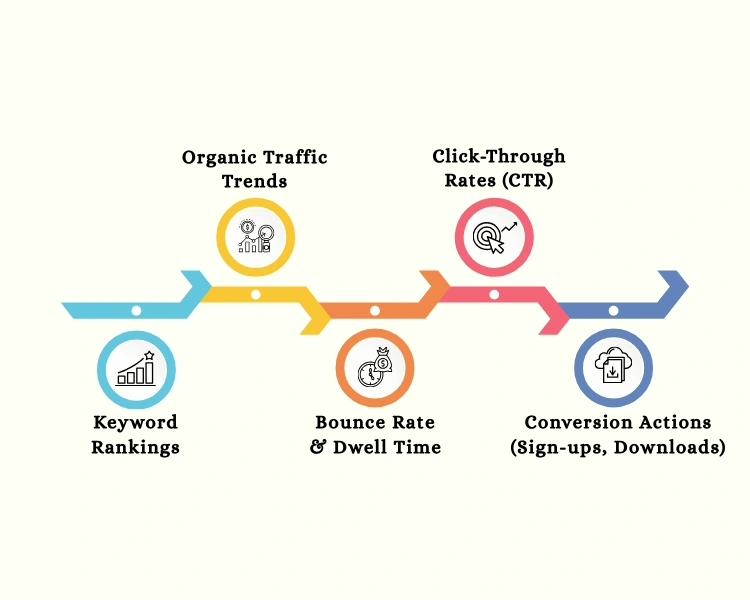
You will have a more powerful weapon to support your marketing strategy based on slight or incremental gains, which will ultimately lead to content-driven visibility for your business at a gradual pace.
1. Organic Traffic Trends
This parameter indicates the number of people who find you via search engines. For instance, if after improving your old blogs, there is an 18% rise in organic traffic, then you can conclude that the refresh was successful.
2. Keyword Rankings
The arrangement of keywords provides a transparent view of the extent to which your content matches the audience’s requirements.
3. Click-Through Rates (CTR)
A low CTR says that even if the content isn’t good, it can still be visible. In fact, even a small improvement of 4% can have a huge impact on the number of visitors.
4. Bounce Rate & Dwell Time
These metrics indicate the relevance of your content to users. A good example is adding FAQs to reduce bounce. This leads to better optimisation because you can improve readability, design, or structure.
5. Conversion Actions (Sign-ups, Downloads)
In such a light, only traffic would not be significant. Tracking conversions brings out what really drives the ROI; these are the tricks of Dollar-a-street marketing based on data. This shows whether your SEO traffic is turning into business value.
What is the 3-3-3 Rule in Marketing?
Under the watch of Twitter, there is this rule: “You have only 3 seconds to make your page look worth it to users.” Therefore, your title and opening sentences should be very clear and defined. Actually, studies demonstrate that users abandon sites that take too long to load or are too confusing for them.
To begin with, the rule recommends immediately letting the audience see the three main points that are the most important ones to notice. As an illustration, a skincare brand may underline “Safe Ingredients, Visible Results, Affordable Price.” In a similar vein, these points serve as hooks.
Finally, the last section is about three supporting details that make it through to the user and grant them permission to trust you. A perfect example is Amazon presenting key benefits, data-driven marketing solutions, reviews, and delivery options upfront.
The Role of Analytics in Data-Driven SEO
Analysing data is a part of the entire process and gives you a sense of direction. On top of that, it reveals user activity, preferences in content, and the actual source of your website’s traffic. An example is that Google claims that about 58% of marketers consider analytics as a crucial method to influence their organic strategies.
Moreover, analytics play a vital part in identifying and verifying the weaknesses. A pricing page, for example, marked by a high bounce rate may indicate the presence of uncertain or perplexing content. However, heatmaps are the tools that indicate precisely the areas where users are most attracted. Thus, your content-related decisions become much more powerful.
Nevertheless, data-driven content marketing has analytics as its main supporter, which is through the guidance of keyword opportunities, the suggestion of content formats, and improvements in pages. So, reinforcement is also provided to keep a track of progress, design a full-fledged SEO action plan, and write user-oriented content.
The Reason Behind Navigating Algorithms in Data-Driven Marketing
The algorithms advance at a rapid pace, and if you are getting yourself updated, you are still recognizable.
By employing proper data-driven marketing insights, you will be able to gradually adjust your SEO, and as a result, there will be no sudden drops in your rankings.
- Regularly monitor updates- This is very beneficial as it allows you to act in advance. For instance, when Google gave more importance to helpful content, brands that were providing value to users were seeing better results.
- Target users’ needs- By doing so, your pages will relate to what the users actually require. Besides, it will strengthen the trust signals.
- Consistently upgrade content quality- Moreover, it will also be considered as new and relevant to users since old blogs are being updated, thus resulting in better ranking and more stability.
- Technical hygiene is the main focus- Fast loading, mobile-optimised pages get more traffic. A case in point is a 1-second delay that can cut conversion rates by 7%.
- Get content in different formats- Videos, FAQs, and pictures keep users on the site longer.
Conclusion
Ultimately, the Brand that has finally connected with the audience and is making data-driven marketing decisions on actionable insights is the winner. When you have the habits, statistics, and motives that the users express, your progress easily becomes a matter of forecasting rather than gambling. You create custom content, you show up for the important keywords, and you have a natural marketing power that is getting stronger with every advancement.
Eiy Sys has gone beyond the mere data analysis and is already facilitating the process of turning data into meaningful actions, better campaigns, and larger visibility for businesses. If you are indeed interested in bringing about a transformation to your digital image through a strategy that is rooted in clarity, accuracy, and genuine user activity, then this is the perfect time for you to take action. Contact Eiysys today and get your marketing insights done.
Frequently Asked Questions
Understanding user behaviour helps you see what your audience actually wants, clicks, and stays for. When you know their patterns, you can create content that matches their expectations. This leads to better engagement and higher chances of appearing in search results.
It’s a good idea to refresh your content every few months, especially if it includes trends, statistics, or time-sensitive information. Updating your pages helps maintain relevance and can improve performance because search engines favour fresh, accurate content.
Businesses should focus on performance metrics like traffic, click-through rates, conversions, and user journeys. These numbers reveal what’s working, what needs improvement, and where new opportunities are emerging. Tracking them regularly makes decision-making much easier.
Absolutely. Even basic insights can make a huge difference. Simple tools show you what people are searching for, which pages perform well, and where visitors drop off. These small discoveries help you make smarter decisions without needing a large budget.

Jasleen Kaur
Hi, I’m Jasleen, a content writer and SEO enthusiast who loves turning ideas into engaging, reader-friendly content. I create blog posts, articles, and web copy that not only inform but also help websites rank higher on search engines. Combining st...read more