


The practice of Programmatic SEO enables you to grow your organic traffic through automated methods, which handle page creation at a volume that exceeds what manual work can produce. The solution you seek exists in this strategy because it enables your website to achieve rankings for all relevant keyword variations without putting excessive strain on your team’s resources.
The main issue here is whether you are applying this method to create advantages that benefit your audience. Proper execution of your strategy enables you to increase website visitors while establishing brand trustworthiness. The following guide will show you how to use this technique effectively while sidestepping frequent mistakes, which will enable you to achieve customised growth results.
What is Programmatic SEO?
The programmatic SEO method enables you to produce multiple SEO-optimised web pages through the combination of structured data, templates, and automated systems. Major platforms use programmatic SEO examples through location pages and comparison pages, which enable them to obtain extensive long-tail search traffic.
The method achieves optimal results when your organisation possesses accurate data, and your team develops effective page design templates. Ahrefs data shows that more than 60 % of popular websites achieve rankings for multiple long-tail keywords through their automated page design systems.
SEO does not involve creating low-quality content through excessive web page publication. The essential factor of the process requires organisations to establish automated systems that deliver relevant outcomes. Also, the programmatic SEO tools work together with advanced data models to enable businesses to generate content that both fulfils user requirements and meets search engine standards.
Traditional Content vs. Programmatic SEO: What is Suitable for the Digital Business of Today
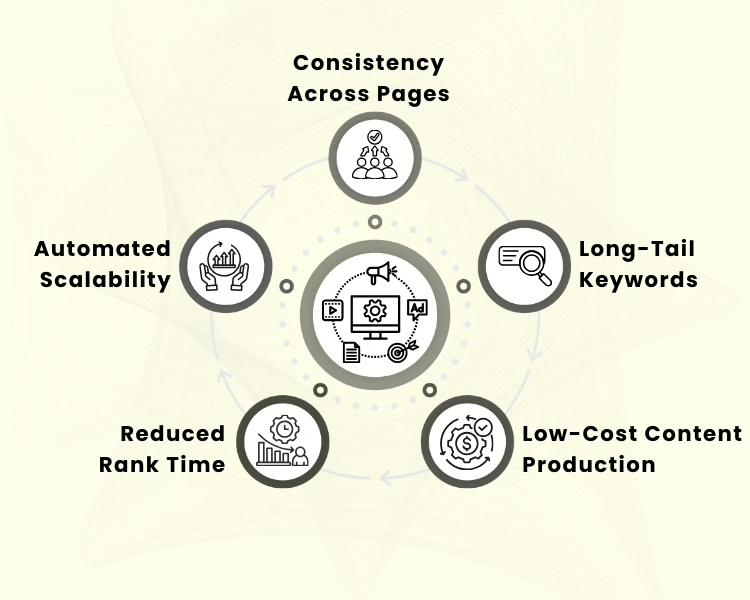
Businesses select this method because it enables them to resolve their scalability issues while maintaining their search engine optimisation results.
The process of traditional content creation requires more time and resources because it needs to develop content for multiple keyword options, which exceed one thousand terms.
Below is the breakdown of differences between SEO programmatic and traditional content creation.
- Automated Scalability
Programmatic Search Engine Optimisation enables users to create thousands of web pages within a short time by using data templates. It aims to help teams better utilise their time and get organic reach in different zones and keywords. - Reduced Rank Time
Automated pages achieve faster indexing when their systems follow proper organisation. A good example of this is SaaS directories that launch thousands of pages in weeks instead of months. - Low-Cost Content Production
Content production achieves cost efficiency through this method, which eliminates the need for large content teams. One system can accomplish the work of multiple manual processes that need to be done through separate systems. - Long-Tail Keywords
The system provides improved results through its ability to handle long-tail keywords better than its previous capabilities. According to Moz, 70 % of all search queries use long-tail queries for their search needs. - Consistency Across Pages
Templates create a standardised quality that all content must meet. The Programmatic SEO webflow setups allow various brands to create identical website designs and search engine optimisation systems, which they will use across their online platforms.
Is Programmatic SEO Google-Friendly When Done at Scale?
The answer to this question depends on whether your webpages provide actual value to users. Google applies penalties to content that does not meet its established quality requirements while permitting the use of automated systems. Brands that understand consumer behaviour choose intent-based templates because those templates perform better than outdated keyword-based methods.
Airbnb uses automated location pages, which include original content, customer reviews and visual elements. The BrightEdge research discovered that more than 53% of website traffic originates from organic search results, which demonstrates the effectiveness of scalable search-oriented page designs that support ongoing business expansion.
The execution of safety measures determines their success. A structured approach is necessary to create a programmatic SEO strategy because this method guarantees that all content produced will meet established quality standards. The use of automated systems enables organisations to sustain content relevance, which leads to improved search engine rankings.
How to Maintain Content Quality While Scaling SEO Pages
The SEO page development process can be gruelling because of quality control, in that it is able to handle its operations with appropriate mass and scope. The process of creating content becomes more efficient through automation, but organizations should use automation to help people work instead of making permanent replacements.
A) Create Intelligent Templates
Templates need to develop their capacity to handle different types of data.
Developing Contextual Descriptions
Establish internal link connection methods
B) Dynamic Metadata Optimization
The process of validating structured data needs to occur on a consistent schedule.
The top-performing pages require manual assessment.
They must track affirmative action metrics from time to time.
Which Insights are Essential for Programmatic SEO's Success?
When systems, data, and strategic planning unite as one, Programmatic SEO can provide the most effective results. From a user’s perspective, websites need to provide useful content that should not appear to be generated automatically.
- A programmatic SEO strategy- The first step requires organisations to identify their strategic objectives, together with their specific keyword groups and designated webpage purposes.
- The system requires structured data- Data cleansing represents the most crucial step for achieving correct results. The best templates cannot function without this essential component.
- High-quality templates- The majority of organisations implement programmatic SEO webflow, which enables them to create scalable designs that comply with search engine optimisation standards.
- The process of performance assessment- The process of performance assessment requires organisations to monitor their ranking position and user engagement, which enables them to enhance their template design process.
- Real-world validation- The analysis of Programmatic Search Engine Optimisation cases from top platforms enables you to learn from frequent errors while developing a more intelligent scaling approach.
Conclusion
The application of programmatic SEO enables you to increase your website’s organic visibility through high-intent search traffic, which your business needs to scale. Your business achieves success through the effective combination of automated processes and features that provide actual value to users because every website needs to fulfil a specific function for its visitors.
Eiy Sys provides the solution. Our experts will assist you in creating an SEO strategy that will generate measurable business growth when you decide to transform your SEO system into a scalable measurement system. The optimal moment to take action exists whether you need to establish a new system or improve your current one. Contact us today and let’s build an SEO framework that drives long-term results for your brand.
Frequently Asked Questions
Typically, you may start seeing indexing and early traffic within 4–8 weeks. However, meaningful growth depends on your data quality, site authority, and how well your pages match user intent.
Yes, it can. Even with limited resources, you can target niche long-tail keywords and scale gradually, making it a cost-effective option compared to traditional content creation.
Not necessarily. Many teams use no-code or low-code platforms and SEO tools to manage templates, data, and publishing, with minimal technical involvement.
By using dynamic templates, unique data points, and contextual content for each page. Regular audits and performance monitoring also help maintain content quality and originality.

Jasleen Kaur
Hi, I’m Jasleen, a content writer and SEO enthusiast who loves turning ideas into engaging, reader-friendly content. I create blog posts, articles, and web copy that not only inform but also help websites rank higher on search engines. Combining st...read more