


As a website optimiser, you need to engage with your unique amount of potential clients through on-site action tools. The analytic dashboard will show the increased website organic traffic, which further makes you happy. However, your objective needs to build real customer relationships who will find your materials online while selecting your brand instead of your rival companies.
This blog is for you if you care about results that go beyond charts and reports. You will see how to find the factors that drive engagement while safeguarding your SEO assets that meet your objectives. If you want to turn visitors into committed users, now is the time to change your methods for creating and maintaining relationships with your ideal audience.
What is Organic Traffic?
People who will visit your website through search engine results – they did not use paid ads or artificial traffic methods to generate organic website traffic. Users experience this situation when they use Google to find information and select a search result that provides the information.
The first page of Google search results presents a blog that people view as trustworthy, as it remains at that position for several months. Brands that allocate resources to content creation, SEO development, and user experience design achieve consistent growth throughout their business operations.
Organic traffic does not deliver immediate results according to its definition. Your content will increase its audience when it effectively addresses actual issues. Also, SaaS blogs demonstrate this concept by creating “how-to” content, which brings in thousands of monthly visitors without needing to invest in advertising.
Synthetic Traffic Or Organic Traffic: Key Differences
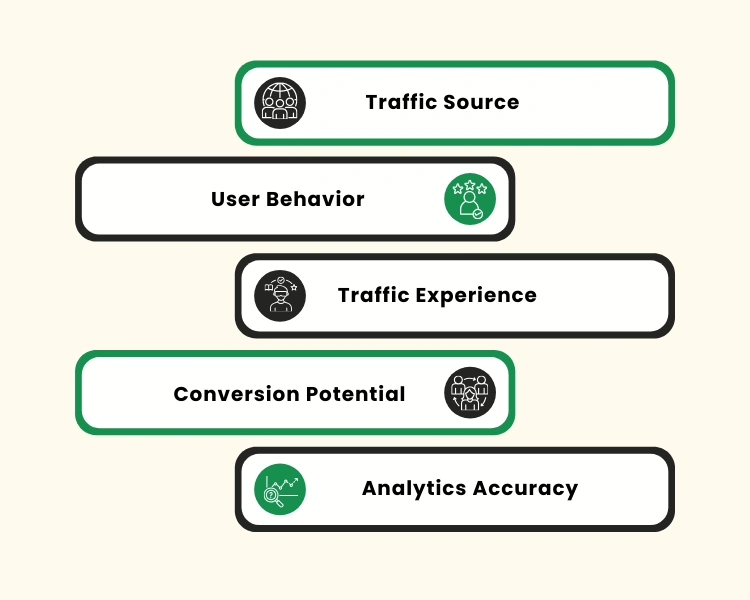
The dashboard analytics display synthetic traffic and organic website traffic in the same way, but the two types of traffic result in two entirely different outcomes.
Actual visitors to the website demonstrate three user interactions through their scrolling and conversion activities, whereas synthetic traffic generates fake website data that holds no actual worth.
- Traffic Source
Users who search Google for answers generate organic website traffic through their authentic search activity. Synthetic traffic emerges from automated systems and click farms, which create artificial user activity. Also, a sudden increase of 10,000 visitors in a 12 to 1 hour period creates an alert that requires investigation. - User Behaviour
Users interact with content by reading through it while scrolling and executing various interactions. Synthetic visitors leave websites within seconds after arriving at the site. Google indicates that websites that achieve high user engagement will achieve better rankings in search results. - Traffic Experience
Your content reaches greater authority and visibility for this reason. The use of synthetic traffic results in penalties for websites that end up with fake traffic at their disposal. Further, websites that depend on fake traffic experience sudden ranking drops because of this practice. - Conversion Potential
Users who arrive through organic channels convert their visits because they have specific goals to achieve. Users who search for “best CRM for startups” already know the solution to their current issue. Companies spend their funds on artificial website traffic, which results in false performance metrics but does not generate genuine customer conversions. - Analytics Accuracy
Organic traffic enables websites to track their performance because it provides native tracking capabilities. The data analysis produces essential insights that help create content and design user experiences. The generation of synthetic traffic imparts incommensurate spuriousness information from which genuine decisions can never be applied.
How to Increase Organic Traffic?
Your first task involves creating content that directly addresses the actual questions that your audience needs answered. HubSpot states that companies that maintain a regular blogging schedule achieve 55% higher organic traffic than companies that do not blog.
However, Long-form guides and comparison blogs rank better because these content types provide extensive topic coverage.
The search engine performance of your website depends on technical SEO, which creates a measurable impact. The study discovered that mobile users who experienced website loading times exceeding three seconds abandoned the site at a 53 percent rate. Google data shows that websites that comply with Core Web Vitals standards have a 24 percent lower bounce rate than websites that do not meet these requirements.
How to Get Organic Traffic to Your Website?
The process of acquiring organic traffic checks requires the combination of strategic planning with ongoing operational performance. This needs continuous evaluation and intelligent content development, and even assessment through an organic traffic check.
The process of obtaining organic website traffic requires three essential elements, which include dedicated efforts, a clear understanding, and a user-centred design. The initial step in developing effective strategies is understanding how search engines reward websites that provide permanent value and seamless user experiences. Your website will gain more visibility over time when you prioritise user assistance instead of pursuing algorithmic strategies. Your website will achieve stable ongoing traffic expansion through this method.
A) Create Value-Driven Content
- Write blogs that solve specific problems
- Use real-world examples and data
- Update old content regularly
B) Optimise for Search Experience - Improve page speed and mobile usability
- Prerequisite for system implementation for the installation of intuitive navigation tools to make surfing content easier.
The Upcoming Future Trends of SEO
The future of SEO now requires websites to show their authentic values and actual user experiences. The search engines give more importance to authentic user interactions instead of artificial performance indicators.
The industry forecasts show that AI-powered algorithms will achieve deeper behaviour analysis by 2026:
- The ranking signals of an AI system – Search engines will assess user engagement through their complete interaction duration instead of counting their clicks.
- Search intent personalisation – User behaviour patterns will determine which results users will receive. The essential need for content to match user requirements has become important.
- Zero-click searches growth – Featured snippets will dominate. Brands need to focus on increasing their online presence because they need to optimise for both visibility and traffic.
- Stronger bot detection systems – Synthetic traffic will be filtered faster. The authenticity of content now serves as a ranking criterion.
- Human-first content emphasis – Content written for people and not algorithms will perform better. Also, trust stands as the primary factor that will determine search engine rankings.
Conclusion
The metric of organic traffic demonstrates that actual users distinguish your content as trustworthy. However, authentic visitors to a website demonstrate their actual presence through extended site activity, which results in eventual conversion. Your business experiences stable growth when your actual website visitors generate measurable results that create important business outcomes.
Eiy Sys team uses their complete understanding of current SEO problems to create data-based methods that help you to reach your business objectives through effective audience targeting and visibility results. Connect with us today to develop traffic methods that quickly contribute to your business expansion targets.
Frequently Asked Questions
Organic traffic comes from real users who are actively searching for solutions. Because of this, they are more likely to engage, trust your brand, and convert.
Yes, it can. Synthetic traffic often shows abnormal behaviour patterns like high bounce rates and zero engagement. As a result, search engines may flag your site for suspicious activity.
Organic growth takes time, but it is sustainable. Typically, you may start seeing noticeable improvements within 3–6 months, depending on competition and content quality.
You should look beyond visitor numbers and focus on engagement metrics. For example, time on page, scroll depth, and conversions indicate quality traffic.

Jasleen Kaur
Hi, I’m Jasleen, a content writer and SEO enthusiast who loves turning ideas into engaging, reader-friendly content. I create blog posts, articles, and web copy that not only inform but also help websites rank higher on search engines. Combining st...read more