
With the trend of using voice assistants like Amazon Alexa, Google Assistant, and Apple Siri becoming increasingly popular, Voice Search Optimization is the key for businesses to reach more online. More and more people are relying on voice search for instant information, local recommendations, and web browsing with their hands free, and businesses must change their content strategy to match the new trend. Unlike the conventional text-based search, voice searches are more conversational and are usually shown as complete questions, so businesses must re-plan their SEO strategy.
Voice Assistant Optimization includes targeting long-tail keywords, natural language searches, and question-based search queries that are the way humans naturally speak. Optimizing for featured snippets, using FAQ sections, and using structured data markup can make voice search results more prominent. Additionally, as voice searches are highly location-based, local SEO strategies, such as having up-to-date Google Business profiles and including location-based keywords, are key for businesses looking to target local customers.
As voice technology is becoming more powerful with AI, businesses investing in Voice Assistant Optimization will be the pioneers in reaching more people. Having websites like mobile-friendly, fast-loading, and optimized for natural language queries will boost search rankings and user experience. Implementing these strategies will keep businesses ahead in the fast-changing digital world and respond to the growing number of users using voice search to access information.
What Is Voice Search Optimization, And Why Does It Matter For Content Marketing?
Voice search optimization is the process of optimizing online content to rank higher in voice search results on search engines such as Google Voice and voice-enabled assistants such as Amazon Alexa, Apple Siri, and Microsoft Cortana. Voice searches are unlike text-based searches because they are longer, more conversational, and usually in full-question form. Companies need to get their SEO campaigns to evolve by incorporating long-tail keywords, natural language processing (NLP), and structured data to make their content compatible with the way people speak. Voice Assistant Optimization enhances discoverability and search rankings, keeping companies in touch with this evolving digital landscape.
As voice assistant become more advanced, they are significantly influencing search trends, pushing businesses to rethink their digital marketing strategies. A large percentage of voice searches are local-based, meaning companies must prioritize local SEO by updating their Google Business profile, including relevant location-specific keywords, and ensuring their website is optimized for mobile devices. Moreover, Google Voice often pulls responses from featured snippets, making it crucial for businesses to format their content in a clear, concise, and structured manner.
Integrating voice search optimization into content marketing strategies is no longer optional but essential for brands aiming to maintain a strong online presence. As consumer behavior shifts towards hands-free, voice-driven interactions, businesses that adapt by creating fast-loading, mobile-friendly, and voice-friendly content will gain a competitive edge. Staying ahead of search trends by continuously refining content for voice search ensures that brands remain visible, accessible, and authoritative in an increasingly voice-first digital world.
How Can Content Be Optimized For Voice Search In SEO And AI Assistants Like Google Voice?
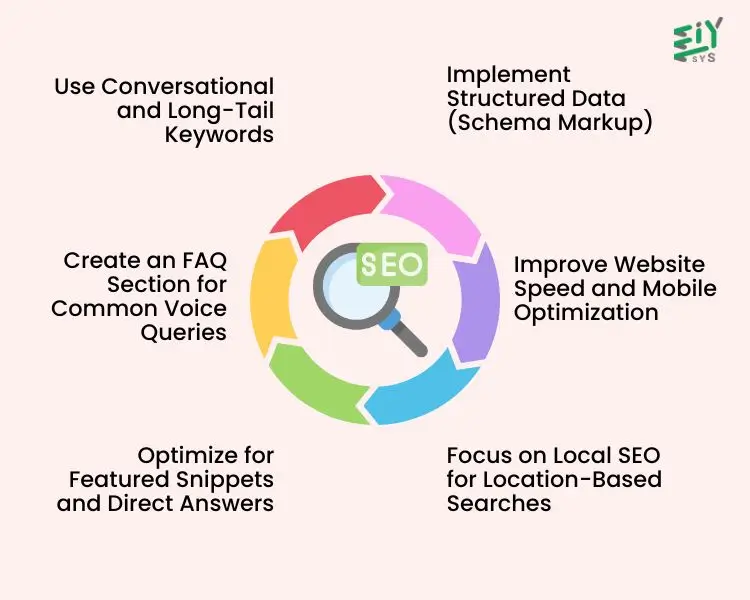
By applying these voice search optimization techniques, businesses can align with evolving search trends, enhance their content marketing strategies, and improve visibility on voice assistants like Google Voice, some of the techniques are given below:
1. Use Conversational and Long-Tail Keywords
Voice search queries are more natural and conversational, requiring content to be optimized with long-tail keywords and question-based phrases. Since users interact with voice assistant like Google Voice using complete sentences, structuring content in a conversational tone improves search rankings.
2. Optimize for Featured Snippets and Direct Answers
AI assistants often pull responses from featured snippets, so structuring content with clear, concise answers is crucial. Using bullet points, numbered lists, and direct responses improves SEO and increases the chances of appearing in top voice search results.
3. Focus on Local SEO for Location-Based Searches
Many search trends in voice search revolve around location-based queries like “best restaurants near me.” Optimizing for local SEO by updating Google Business profiles, using location-specific keywords, and ensuring NAP consistency helps businesses rank higher in Google Voice search results.
4. Improve Website Speed and Mobile Optimization
Fast-loading, mobile-friendly websites perform better in Voice Assistant Optimization since most voice searches happen on mobile devices. Enhancing page speed, enabling AMP (Accelerated Mobile Pages), and ensuring responsive design improves user experience and SEO rankings.
5. Implement Structured Data (Schema Markup)
Using structured data (schema markup) helps Google Voice and other AI assistants understand content better. Adding schema markup for FAQs, business details, and product information increases the likelihood of being featured in relevant voice search results.
6. Create an FAQ Section for Common Voice Queries
Since voice searches often follow a question format, adding an FAQ section with well-structured answers enhances content marketing efforts. Optimizing FAQs with SEO-friendly, conversational responses improves voice search rankings and boosts audience engagement.
How Does Voice Search Optimization Benefit AI Assistants And Search Trends?
- Enhances AI Assistants Accuracy – Optimized content helps voice assistants like Google Voice, Alexa, and Siri deliver more precise and relevant answers. By structuring content in a natural, conversational tone with long-tail keywords, businesses ensure that AI-driven voice assistants understand and retrieve their information accurately.
- Improves SEO Rankings and Search Visibility – Google prioritizes voice-optimized content for featured snippets and direct answers, making it easier for businesses to rank at the top of search results. Since voice search queries are often question-based, optimizing content for FAQs and conversational phrases increases the chances of appearing in Google Voice search results.
- Boosts Local SEO and Customer Engagement – A large percentage of voice searches are location-based, such as “best pizza place near me.” Businesses that optimize their Google Business Profile, ensure NAP (Name, Address, Phone) consistency, and include local keywords increase their visibility in Google Voice search results. This leads to more foot traffic and higher engagement from nearby customers.
- Increases Website Traffic and Enhances User Experience – Voice search optimization ensures that content is mobile-friendly, fast-loading, and easy to navigate, improving overall user experience. Since most voice searches happen on mobile devices, a website that loads quickly and provides clear, structured answers benefits from higher organic traffic and lower bounce rates, further improving SEO.
- Drives More Conversions and Lead Generation – Users performing voice searches often have high intent, meaning they are ready to take action, whether it’s making a purchase, booking a service, or visiting a store. By optimizing content for search trends, businesses can attract high-converting traffic, increasing sales and lead generation.
- Keeps Businesses Aligned with Evolving Search Trends – As AI Assistants and Google Voice continue to evolve, businesses that invest in SEO and Content Marketing for voice search remain competitive. Since search behavior is shifting toward voice-first interactions, brands that adapt their strategy accordingly will maintain long-term visibility in search trends.
- Supports Hands-Free and On-the-Go Searches – Many users rely on voice assistants for hands-free searches while driving, cooking, or multitasking. Optimizing for Google Voice ensures content is easily accessible for these users. Providing quick, concise, and relevant answers improves engagement and helps businesses cater to the growing number of voice search users.
Conclusion
In Conclusion, Voice Search Optimization is essential for businesses to stay ahead of evolving search patterns and enhance their SEO rankings. AI assistant-optimized content enhances visibility, user experience, and engagement. By adopting conversational keywords, structured data, and voice-optimized Content Marketing strategies, businesses can enhance their ranking chances in voice search and drive more conversions.
At Eiy Sys, our expertise in Voice Search Optimization helps businesses adapt to evolving search trends and enhance their SEO strategies. We specialize in optimizing content for AI Assistants like Google Voice, ensuring improved search visibility, user engagement, and conversion rates. By adopting conversational keywords, structured data, and tailored Content Marketing strategies, we help brands secure top rankings in voice search results. As voice search continues to expand, Eiysys empowers businesses with cutting-edge solutions to stay ahead of the competition.
Frequently Asked Questions
Voice search changes SEO by prioritizing conversational keywords, long-tail phrases, and featured snippets. Since AI Assistants like Google Voice pull answers from structured, direct responses, optimizing content for voice search improves visibility and rankings.
AI Assistants use advanced algorithms and search trends to fetch the most relevant answers. They prioritize content from featured snippets, structured data, and SEO-optimized pages with clear, concise responses to user queries.
Content marketing for voice search focuses on creating conversational, question-based content that matches how users speak. FAQs, blog posts, and structured answers help businesses align with search trends and improve rankings in Google Voice searches.
A large percentage of voice searches are location-based, such as “best coffee shop near me.” Optimizing for local SEO by updating Google Business Profiles, using location-specific keywords, and ensuring NAP (Name, Address, Phone) consistency helps businesses rank higher in voice search results.
To stay ahead of search trends, businesses should use structured data, optimize for mobile, target long-tail keywords, and create voice-friendly content. Keeping up with Google Voice updates and advancements in AI Assistants ensures long-term success in voice search optimization.