AI in digital marketing utilizes artificial intelligence technologies like data collection, natural language processing, machine learning, and analytics to improve business insights and automate marketing tasks.
One of the major advantages of AI in digital marketing is its ability to process vast amounts of data quickly, providing valuable insights into customer behaviors. These insights allow businesses to personalize their marketing efforts based on customer actions and preferences. AI in digital marketing is also adaptive, learning and improving over time through new data and feedback.
This enhances the effectiveness and relevance of marketing strategies, offering more personalized content. However, AI doesn’t replace humans; rather, it complements and enhances human efforts, requiring human expertise to use effectively for optimal results.<
Future Trends in Digital Marketing
The digital marketing landscape is constantly evolving, driven by technological advancements and changing consumer behaviors. As businesses strive to stay competitive, understanding the future trends in digital marketing is essential for adapting strategies and maintaining relevance in an increasingly dynamic market.
User-Created Content Boosts Your Business
User-generated content (UGC) is becoming increasingly popular as it fosters authenticity. With 62% of people using social media, UGC in the form of images, videos, reviews, and testimonials can effectively promote your brand.Encourage users to share content through incentives like reposting or running contests. As future trends in digital marketing evolve, UGC will continue to play a significant role in boosting brand trust and engagement.
Tailored Personalization For Better Engagement
Personalization has evolved beyond just addressing customers by name. By using buyer personas, data, and smart content strategies, businesses can improve engagement. Future trends in digital marketing will see even more sophisticated personalization as data collection and analysis become more advanced
Harnessing AI For Efficient Marketing
AI tools like ChatGPT enhance digital marketing by streamlining tasks like content creation, sentiment analysis, and customer interaction. Marketers can leverage AI to automate processes while maintaining a personal connection with their audience, positioning it as a key element in future trends in digital marketing.
Human-Centric Content And Storytelling
Storytelling in marketing is vital to creating a human connection with customers. Both B2B and B2C companies can benefit by using conversational language and storytelling elements.
Social Media as a Search Engine
Social media has, however, become more than just the place where one connects on a personal level. Billions of users put social media at the business’s disposal for brand recognition. Fast-trending content on platforms like TikTok is created by consumers, and businesses are adjusting to match the content requirements of users who enjoy short and engaging content.
Artificial Intelligence Marketing Strategies
Data Collection and Analysis
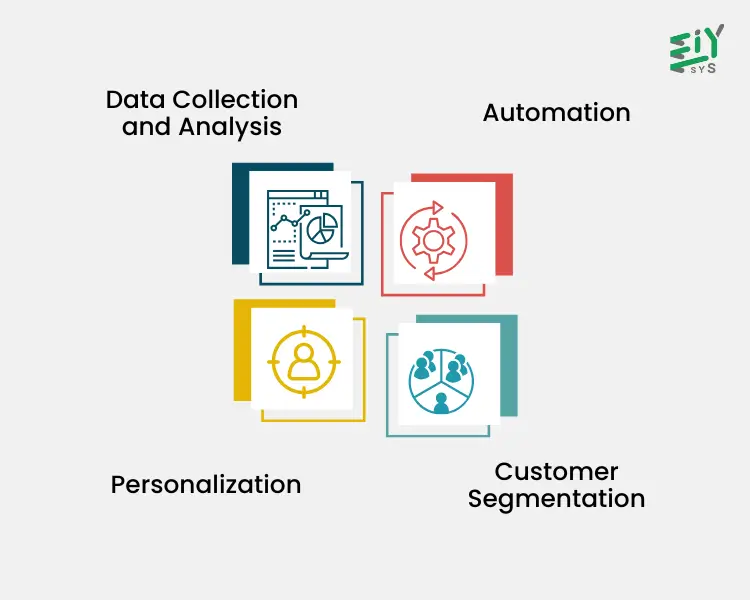
Artificial Intelligence Marketing Strategiesthrive on data. By analyzing large datasets, AI uncovers insights about customer behaviors, preferences, and trends, allowing businesses to make data-driven decisions. This includes areas like customer journey mapping, predictive analytics, sentiment analysis, and sales forecasting, all helping businesses optimize strategies for better results.
Customer Segmentation
AI streamlines customer segmentation by analyzing vast amounts of data to identify distinct segments based on behaviors and demographics. It then delivers tailored content and recommendations to each group, increasing customer engagement and conversions. These Artificial Intelligence Marketing Strategies allow marketers to focus resources on high-value segments, improving overall marketing efficiency.
Personalization
Artificial Intelligence Marketing Strategies enable powerful personalization by tailoring experiences based on customer data, such as browsing history and purchase behavior. Personalized content and offers resonate more with customers, leading to higher engagement and conversions. AI ensures businesses provide the right message at the right time, driving trust and long-term customer loyalty.
Automation
AI-driven automation simplifies marketing by handling repetitive tasks, freeing marketers to focus on strategy. For example, AI uses customer data to craft targeted email campaigns, increasing relevance and effectiveness. With automation, businesses can scale personalized efforts, ensuring consistent communication without sacrificing quality or efficiency.
How Does AI Impact Marketing?
Customer Segmentation and Targeting
AI helps analyze customer data and behavior, allowing marketers to segment their audience effectively and personalize marketing efforts, leading to better engagement, higher conversions, and increased customer loyalty. This is a key part of the broader impact of AI on marketing, as it enables more precise targeting and improved customer experiences.
Automation of Marketing Tasks
AI automates repetitive tasks like email campaigns, social media management, and content creation, saving time and reducing costs. This enables marketers to focus on more strategic, high-value activities, leveraging AI-powered marketing tools to enhance efficiency and effectiveness in their campaigns.
AI-powered Chatbots and Virtual Assistants
AI-driven chatbots provide personalized customer service and support, improving customer satisfaction. However, they have limited responses and may not always address every customer’s query effectively, lacking human connection, which is an important impact of AI on marketing.
Personalized Product Recommendations
AI enhances the customer experience by offering tailored product recommendations based on browsing and purchase history, boosting sales and customer engagement.
Efficiency Boost through Process Automation
AI enhances marketing efficiency by automating repetitive tasks, reducing errors, and improving consistency. However, it requires large volumes of high-quality data and human input to process and organize information correctly.
Fraud Detection and Risk Management
AI helps detect fraudulent activities and reduce risks in marketing efforts. Yet, its effectiveness can be limited when dealing with more intricate or evolving fraudulent tactics.
Lack of Human Creativity
While AI tools like ChatGPT and MidJourney can generate creative content, they still fall short compared to human creativity, which remains more adaptable and nuanced. AI often relies on patterns and data inputs, which limits its ability to think outside the box or respond to complex, evolving contexts. Human creativity, on the other hand, is driven by emotional intelligence, unique experiences, and the ability to make intuitive leaps, allowing for deeper connections with audiences and more innovative, authentic content that resonates on a personal level.
Why Are Digital Marketing Innovations Important?
In today’s digital age, having an online presence is no longer an option, but a necessity for organizations. However, simply having a presence online is not enough. Companies need to constantly evolve and innovate to stay relevant and attractive to their customers. Digital marketing innovations can help organizations keep up with the latest digital trends, better understand their clients, and optimize their marketing strategies for better results. By embracing digital marketing innovations, companies can stay ahead of the competition and deliver more personalized, effective campaigns that resonate with their target audiences.
Conclusion
EIY SYS recognizes the profound impact of AI in digital marketing on business success. As future trends in digital marketing unfold, Artificial Intelligence Marketing Strategies will play a crucial role in enhancing customer engagement, personalization, and optimizing marketing efforts. The impact of AI on marketing, supported by AI-powered marketing tools, helps automate processes, drive efficiency, and improve targeting.
Embracing digital marketing innovations allows companies to stay ahead of the competition, connect with audiences effectively, and create campaigns that resonate. By leveraging these advancements, businesses can achieve sustainable growth in the digital age.
Frequently Asked Questions
AI in digital marketing refers to the use of artificial intelligence technologies like data collection, machine learning, natural language processing, and analytics to improve marketing strategies. It allows businesses to automate tasks, personalize content, and gain deeper insights into customer behaviors, ultimately enhancing engagement and conversion rates.
AI analyzes large datasets to identify distinct customer segments based on behaviors and demographics. This helps businesses deliver more personalized marketing efforts, improving customer engagement and loyalty. AI enhances targeting by ensuring that marketing messages are relevant and tailored to individual needs.
Future trends in digital marketing include the rise of user-generated content (UGC), increased personalization through data analysis, AI-powered automation for marketing tasks, and storytelling as a key strategy to build human connections with customers. Additionally, social media is evolving as a powerful search engine for brands.
Digital marketing innovations are crucial for businesses to stay competitive in the digital age. They help companies adapt to new technologies and changing consumer behaviors, enabling them to create more effective and personalized marketing campaigns that resonate with their target audience.
AI-powered marketing tools automate repetitive tasks like content creation, email campaigns, and customer interactions, freeing up marketers to focus on more strategic activities. These tools improve efficiency by delivering personalized content, increasing customer engagement, and optimizing overall marketing efforts for better results.