


Technology in Agriculture has significantly changed farming by adding effectiveness, sustainability, and productivity. Precision tiling utilizes tools like GPS, IoT detectors, and data analytics to ameliorate land operation, examiner crops, and efficiently manage coffers similar to water and diseases. Drones are used for crop monitoring, pest control, and mapping, while IoT bias offers real-time information to support better decision- timber.
AI and machine literacy help in prognosticating crop yields, relating conditions, and perfecting farming ways. Robotics automates processes like planting and harvesting, cutting down on labour costs. Vertical agriculture optimizes inner spaces for crop products, and inheritable engineering improves crop adaptability. Blockchain technology ensures translucency and traceability within the food force chain.
Data analytics allows farmers to enhance decisions around planting, irrigation, and pest management. Technology in agriculture also promotes sustainable practices, such as precision irrigation and renewable energy, helping reduce agriculture’s environmental impact.
What Is Agriculture Technology?
- Ultramodern granges have evolved significantly, thanks to advancements in agriculture technology, including detectors, ministry, and information systems.
- At the moment, agriculture technology is generally used with tools like robots, temperature detectors, upstanding imagery, and GPS systems.
- These inventions in precision farming and robotic systems enable businesses to boost profitability, enhance effectiveness, ameliorate safety, and promote environmental sustainability.
How Have Farming Inventions Improved Agricultural Productivity?
Farming innovations have enhanced productivity in several ways, including
– Precision tiling : Uses GPS, detectors, and drones to optimize water and toxin use, leading to advanced yields and lower costs.
– Vertical tilling : Crops grown outdoors in controlled surroundings help save space, conserve water, and encourage sustainable practices.
– Irrigation systems : Allow crops to grow in dry areas, expanding farming potential.
– High- yielding crops : Technological advances have led to pest- and complaint- resistant crops, perfecting productivity.
– robotization : Streamlines processes like tending and harvesting, reducing reliance on homemade labor.
– Processing machinery: Innovations in this area have reduced waste during production.
What Technologies Are Used In Smart Farming?
Smart Farming includes colorful technologies designed to enhance agrarian practices, similar as
– Machine literacy : Predicts climate changes, soil conditions, and pest outbreaks.
– Smart detectors : Enable real- time monitoring of environmental changes.
– Drones and satellites : Allow remote monitoring and streamlined field charts.
– Big data : Facilitates long- term opinions and immediate conduct.
– IoT : Integrates systems into a cohesive network for data sharing and conduct grounded on patterns.
These technologies offer significant advantages by assaying multiple parameters and reducing crimes. Technology in agriculturehas converted farming, making it more effective and precise.
What Are The Rearmost Agricultural Tech Trends?
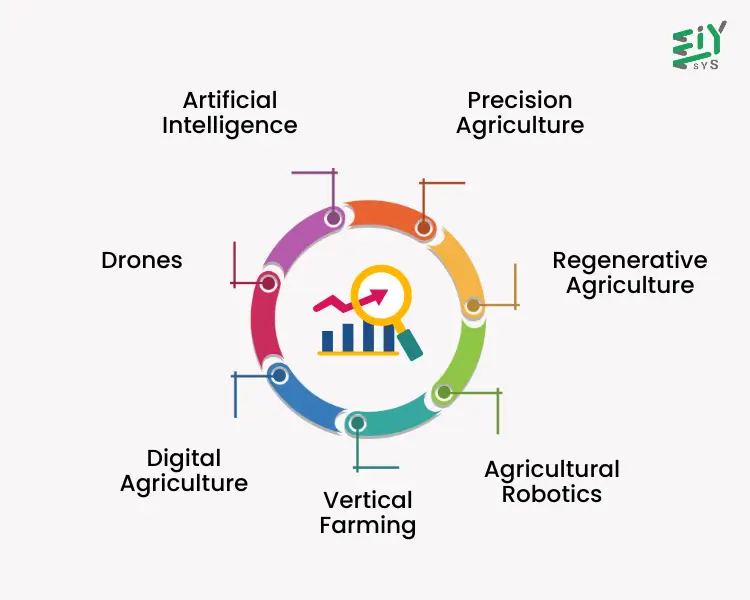
Recent agrarian tech trends include :
– Precision Agriculture : Helps apply the right quantities of coffers to specific areas, perfecting crop quality and affairs.
– Regenerative Agriculture : points to cut down carbon emigrations and enhance adaptability against climate change.
– Agricultural Robotics : Robotic machines handle tasks like planting and harvesting.
– Vertical Farming :Crops are grown indoors in controlled settings, allowing for better space utilization, water conservation, and year-round crop production.
– Digital Agriculture : Uses drones, automated harvesters, and IoT bias to optimize resource use.
– Drones : help in gathering data on crop development.
– Artificial Intelligence : Supports sustainable agrarian practices and improves food force chain effectiveness.
What Are The Benefits of Precision Agriculture?
Precision agriculture benefits both growers and the terrain, including
– Lowering resource costs.
– Promoting soil health by reducing fungicide use.
– Reducing reliance on rainfall patterns for crop success.
– Maximizing crop inheritable eventuality.
What Role Does Data Play In Technology In Agriculture?
Data plays a pivotal part in helping growers make smarter opinions and increase crop product :
– Precision Agriculture : GPS and digital mapping help target specific field areas, perfecting resource use.
– Smart Farming: Data analytics informs opinions on crop health, soil conditions, and resource operation.
– Yield vaticination : assaying data helps prognosticate crop yields directly.
– Reducing Food Waste : Data analytics helps reduce waste by assaying consumer demand.
– Relating Crop Traits : Data helps identify flexible crop traits for better farming practices.
How Do Agri- Tech Advancements Help Ameliorate Crop Yields?
Agri- tech advancements are revolutionizing farming by incorporating real- time data and technologies :
– Precision Agriculture :Real- time information optimizes water, diseases, and fungicides.
– Smart glasshouses : Use algorithms to acclimate conditions for optimal factory growth.
– Satellite Imagery : Helps examiner crop health and rainfall changes.
– 5G Networks : Enable hot, dependable data transmission for accurate AI models.
– IoT Soil Detectors : give real- time soil condition data.
– Phase Change Accoutrements : Control temperatures in glasshouses and storehouses, reducing energy operation.
These advancements make tilling more effective and environmentally friendly.
Conclusion
EIY SYS is at the forefront of utilizing technology in agriculture to transform the farming industry. By adopting agriculture technology like precision agriculture, smart greenhouses, and data analytics, the company helps farmers enhance yields, sustainability, and efficiency. Farming innovations such as AI, IoT, satellite imagery, and advanced irrigation are revolutionizing decision-making and minimizing environmental impact.
As agricultural tech trends progress, they improve resource management, productivity, and resilience. The use of precision agricultureand agri-tech advancements is making farming more efficient, sustainable, and capable of meeting global food needs.
Frequently Asked Questions
Technology in agriculture improves farming by making operations more efficient, sustainable, and productive. Tools like precision farming, drones, AI, and data analytics help farmers optimize resource usage, predict crop outcomes, and make better decisions for improved results.
Key farming innovations include precision agriculture, smart greenhouses, vertical farming, and robotics. These technologies make crop production more efficient, reduce waste, and support sustainable farming practices.
Precision agriculture uses technology like GPS, IoT sensors, and satellite imagery to manage resources like water and fertilizers more precisely, leading to higher crop yields, reduced costs, and better environmental outcomes.
Agri-tech advancements, including real-time data analytics, smart greenhouses, 5G networks, and IoT sensors, enable farmers to monitor crops, optimize growing conditions, and make more informed decisions, all of which lead to increased crop yields.
Data analytics helps farmers make informed choices about irrigation, crop health, and pest control. It also improves yield predictions, reduces food waste, and identifies crop traits that enhance resilience to pests and environmental stress.
