


Distributed Agile teams have members spread across various locations, working remotely instead of from a central office. They rely on regular communication and a variety of collaboration tools to stay connected.
When it comes to a distributed Agile team, refers to a group that follows Agile principles while working together on projects, despite being located in different parts of the world. The team adheres to Agile practices, working in sync to develop high-quality products, ensuring effective collaboration and continuous progress even from afar.
It combines remote work’s flexibility with Agile methodologies’ structure to deliver exceptional results.
What Are The Best Practices For Managing Distributed Agile Teams?
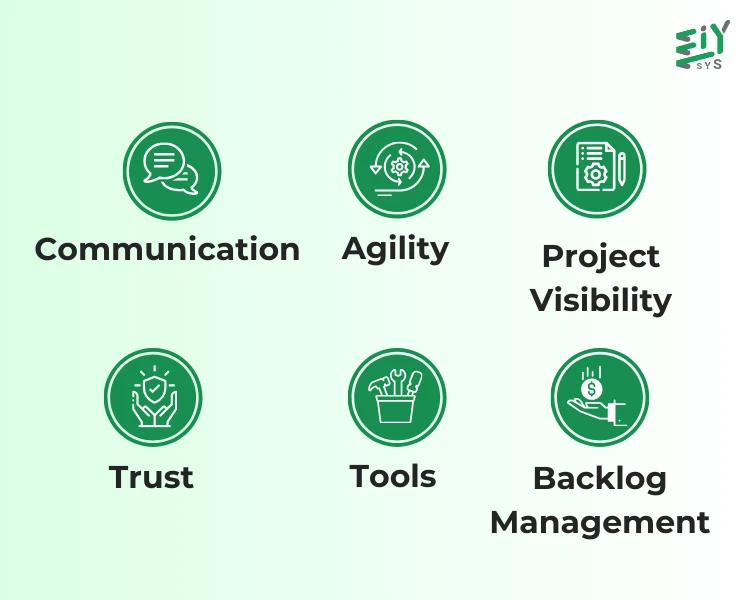
- Communication: For distributed Agile teams, establishing clear communication channels and prioritising collaboration tools that enable seamless teamwork across locations is crucial.
– Setting up daily check-ins to ensure the team stays aligned
– Promoting Agile values to foster shared ownership and a unified sense of purpose
- Project Visibility : For distributed Agile teams, it’s important to keep everyone updated on the progress of each project. Agile project management tools can help maintain transparency and ensure all team members have visibility into the current status and priorities of the project.
- Trust : Encourage transparent communication, respect for different perspectives, and a collaborative approach to problem-solving.
- Agility : Promote agility across distributed locations, ensuring team members can adapt quickly to changes during the development cycle.
- Tools : Implement continuous integration tools that automate builds and support ongoing monitoring of project quality.
- Backlog Management : The Product Owner is responsible for maintaining the backlog and assigning priorities. These priorities are adjusted based on stakeholder feedback and evolving project circumstances.
How can a distributed Agile team measure its success and continuous improvement?
- Retrospectives : Regularly reviewing the team’s processes helps improve collaboration and fine-tune how they work together, ensuring continuous enhancement of their practices.
- Metrics : Track progress using various metrics, such as:
– Cycle time : Indicates productivity
– Escaped defect rate : Reflects product quality
– Planned-to-done ratio : Measures predictability
– Happiness metric : Assesses team morale and stability
– Workload distribution : Shows how evenly work is assigned among team members
- Foster a Culture of Experimentation : Encourage team members to share their ideas and insights, creating an environment where innovation is welcomed and new approaches can be explored safely.
- Continuous Improvement : Often referred to as kaizen This approach helps identify areas to streamline workflows, reduce waste, and optimise processes over time.
- Customer Satisfaction : In Agile organisations, customer satisfaction is considered a vital metric for evaluating success and delivering value.
- Additional Strategies for Distributed Agile Teams : To further enhance the effectiveness of distributed Agile teams , consider:
– Maintaining visibility of project status
– Investing in tools that support communication and collaboration
– Equitably distributing tasks among team members
– Ensuring consistent code quality checks
What are the best practices for leading remote teams?
The best practices for leading remote teams are as follows :
- Set Clear Expectations : For remote teams it’s essential to clearly define the team’s purpose, roles, and responsibilities. Ensure everyone understands their deliverables, deadlines, and your availability for support when needed.
- Communicate Regularly : Check in with your remote teams regularly, whether through daily stand-ups or one-on-one meetings. Use video conferencing, instant messaging, and project management tools to maintain effective communication.
- Be Considerate of Time : Respect your remote team’s time by keeping meetings brief and allowing team members some flexibility to join.
- Promote Work-Life Balance : Encourage team members to set their own hours within a general framework. Lead by example by taking time off and promoting the importance of work-life balance.
- Provide Resources : Invest in tools that enhance collaboration, security, and efficiency. Also, provide wellness resources, such as mindfulness apps, virtual fitness classes, or mental health support.
- Encourage Social Interaction : Foster a friendly environment for your remote teams by creating opportunities for informal interactions, like dedicated Slack channels for sharing fun content or organising casual video calls.
- Be Aware of Stressors : Monitor any signs of stress in your remote teams. Be proactive in identifying challenges and providing additional resources to help them manage their workload effectively .
What Are The Key Principles Of Agile Team Management?
Principle 1: Achieve customer satisfaction through continuous software delivery Software is built to solve real problems and improve tasks for the end user, not just to exist. Often, the focus on customer needs can be overlooked. To align with this principle in Agile team management , limit the scope of changes at each stage. This allows for quicker feedback, helping the team adjust and meet customer expectations more effectively.
Principle 2: Embrace change In Agile team management change is embraced as a way to improve the product and maintain the customer’s competitive edge. You don’t need to wait for a full redesign; adjustments can and should be made as needed throughout the development process.
Principle 3: Deliver working software frequently, with a preference for shorter cycles: Traditional development often focused heavily on documentation, leading to projects where there was plenty of paperwork but little actual working software. **Agile team management** prioritises delivering functional software quickly, ensuring that planning and delivery cycles are short and focused on creating real, working solutions.
Principle 4: Collaboration between developers and management : For successful Agile team management Close collaboration between developers and management is critical. Co-location is ideal, but remote teams can use communication tools to help everyone understand each other’s perspectives and collaborate effectively.
Principle 5: Build projects around motivated, trusted individuals : Agile relies on self-organising teams, where members take ownership of their work and are trusted to meet their objectives. Providing the right environment and resources is key to ensuring teams succeed without micromanagement.
Principle 6: Face-to-face communication is the most effective : Face-to-face communication, whether in person or virtually, is essential. This allows for quick problem-solving and more direct collaboration, making it easier for teams to stay aligned.
Principle 7: Working software is the primary indicator of progress : The primary measure of success for an Agile team is whether the software works as intended. Prioritise functionality over hours worked, documentation produced, or bug fixes completed, since a product that doesn’t work doesn’t deliver value.
Principle 8: Agile processes promote sustainable development : Teams are encouraged to work at a sustainable pace. Avoiding burnout through balanced workloads ensures that team members can stay productive over the long term, delivering quality results without sacrificing well-being.
Principle 9: Focus on technical excellence and good design : Code quality should improve with each iteration. Developers should regularly clean up redundant or inefficient code, addressing problems as they arise rather than waiting until later in the project.
Principle 10: Simplicity is key : Simplicity means focusing on what is most important and cutting out unnecessary tasks. Tools like Trello and InVision can help teams stay organised and focused on delivering value.
Principle 11: The best architectures, designs, and requirements emerge from self-organising teams : An empowered, self-organising team is crucial. Teams that direct themselves are more engaged, solve problems independently, and take ownership of their work without needing micromanagement.
Principle 12: Inspect and adapt : Regular inspection and adaptation is key. Teams should reflect on their processes, make adjustments where needed, and continually improve how they work, ensuring they remain agile and responsive to change.
What is Distributed Scrum?
- Distributed Scrum is the application of Scrum framework when team members are geographically dispersed across multiple locations, often working in different time zones.
- It involves adapting Scrum practices and ceremonies to accommodate remote collaboration, using digital tools for communication, coordination, and knowledge sharing.
- Distributed Scrum teams must place extra emphasis on clear communication, trust, transparency, and documentation to overcome the challenges of working across different locations and ensure successful project delivery.
What AreThe Benefits Of Remote Collaboration?
The purpose of remote collaboration is to enhance a company’s overall productivity. When team members work well together, their collective efforts can lead to better results than any single person could achieve. Remote collaboration supports this type of teamwork, enabling greater outcomes.
The benefits of remote collaboration are :
- Increased Productivity : Productivity is crucial to an organisation’s success, as it drives efficiency and growth. Working remotely can improve productivity by eliminating the time spent commuting, allowing employees to focus more on their tasks. Many employees find that a home office helps them feel more comfortable and productive. Online meetings can also be more efficient, saving time compared to in-person meetings.
- Freedom and Flexibility : Remote work offers employees the flexibility to manage their schedules, balancing both personal and professional responsibilities as long as they meet deadlines. The ability to attend personal appointments without affecting work hours helps reduce stress and improve job satisfaction. This kind of flexibility also fosters trust between employers and employees, resulting in higher morale and greater productivity.
- Cost Reduction : Working in an office can be costly for both employees and employers. Employees spend money on commuting, parking, meals, childcare, and professional attire, while employers incur costs for office space, equipment, and utilities. Employees can have more disposable income, and companies can allocate funds more efficiently.
What role does the Product Owner play in Agile Development?
The product owner plays a crucial role in the success of a project within Agile Development using the Scrum framework . They are responsible for managing and refining the product backlog to maximise the product’s value . Agile Development methodologies like Scrum facilities effective communication and foster self – organisation within the team.
Conclusion
At EIY SYS, we recognize the growing significance of Distributed Agile Teams in today’s business landscape. By effectively utilising Remote Teams And applying sound Agile Team Management practices, companies can boost productivity and ensure strong collaboration, even when team members are spread across various locations. With our expertise in Distributed Scrum , we enable teams to successfully implement Scrum methodologies, ensuring seamless communication through Remote Collaboration tools.
As experts in Agile Development , EIY SYS is committed to helping teams overcome the challenges of remote work while staying true to Agile principles. We assist in optimising workflows, promoting continuous improvement, and ensuring the delivery of high-quality results within deadlines.
With EIY SYS as your partner, you can enhance the effectiveness of your Distributed Agile Teams, foster greater collaboration, and drive exceptional outcomes across your projects.
Frequently Asked Questions
A distributed Agile team is a group of individuals working from different geographical locations while following Agile principles and practices to deliver projects. These teams rely on virtual collaboration tools and communication strategies to maintain productivity and alignment.
Agile in remote settings operates by adapting traditional Agile frameworks to fit virtual environments. Teams use digital tools for sprint planning, daily stand-ups, and retrospective meetings, ensuring continuous collaboration despite physical separation.
Daily stand-ups for distributed teams typically occur via video calls on platforms like Zoom, Google Meet, or Microsoft Teams. Each team member shares updates on their progress, discusses roadblocks, and aligns on daily goals. If time zones don’t overlap, asynchronous updates through recorded videos or shared documents can be used.
Yes, Agile principles are flexible and can be adapted for remote settings. Agile's focus on collaboration, feedback, and iterative improvement makes it well-suited for distributed environments, provided the right tools and practices are in place.
Challenges include time zone differences, communication gaps, lack of team cohesion, and difficulty in maintaining accountability.
